African mahogany
Khaya spp. · Meliaceae · hardwood
Also known as: khaya, acajou d'Afrique, Khaya ivorensis, Khaya anthotheca, Khaya grandifoliola, Khaya senegalensis
Region: Tropical West, Central and East Africa
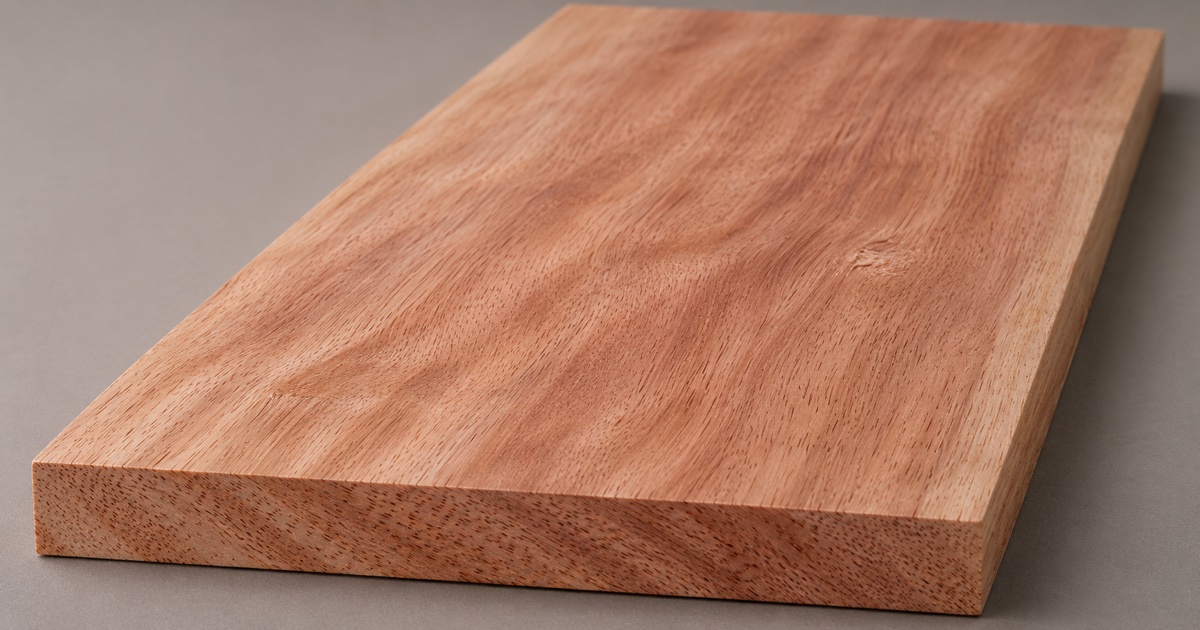
African mahogany is the trade name for several Khaya species, mainly K. ivorensis, K. anthotheca, K. grandifoliola and K. senegalensis. It is a pinkish to reddish-brown hardwood used as a lower-cost alternative to genuine mahogany for furniture, cabinetry, veneer, joinery and boat work.
Health hazards
-
Skin allergy
Evidence: Confirmed in clinical testing
Furniture workers in two UK factories developed allergic skin rashes traced by patch testing to the dust of Khaya anthotheca. Affected workers reacted strongly to anthothecol, a natural compound in the wood.1
- Effects
- allergic contact dermatitis
- Exposure route
- skin
- From
- dust
-
Asthma / respiratory allergy
Evidence: Reported
Occupational asthma from Khaya anthotheca is listed in a peer-reviewed review of wood dust allergy, based on a German workplace study we have not yet been able to check directly.2
- Effects
- asthma
- Exposure route
- inhalation
- From
- dust
-
Cancer
Evidence: Applies to all wood dust
IARC classifies all wood dust as carcinogenic to humans, mainly linked to cancers of the nasal cavity and sinuses after long-term exposure.3
- Effects
- nasal and sinus cancer
- Exposure route
- inhalation
- From
- dust
Not finding a hazard listed here does not mean this wood is safe. All wood dust is hazardous; see how to protect yourself.
Exposure limits
| Body | Limit | Notes |
|---|---|---|
| ACGIH TLV | 1 mg/m³ (inhalable) | source |
| EU binding limit (hardwood) | 2 mg/m³ | Applies to all hardwood dust |
| UK WEL (hardwood) | 3 mg/m³ | Applies to all hardwood dust |
| NIOSH REL | 1 mg/m³ | Recommended limit for all wood dust |
Known compounds
- anthothecol: contact allergen identified by patch testing in sensitized workers (K. anthotheca) source
Sources
- Morgan JW, Orsler RJ, Wilkinson DS. Dermatitis due to the wood dusts of Khaya anthotheca and Machaerium scleroxylon. Br J Ind Med. 1968;25(2):119-125. Link
- Schlünssen V, Sigsgaard T, Raulf-Heimsoth M, Kespohl S. Workplace exposure to wood dust and the prevalence of wood-specific sensitization. Allergol Select. 2018;2(1):101-110. Link
- IARC Working Group on the Evaluation of Carcinogenic Risks to Humans. Wood Dust and Formaldehyde. IARC Monographs on the Evaluation of Carcinogenic Risks to Humans, Vol. 62. Lyon: International Agency for Research on Cancer; 1995. Link
- US Occupational Safety and Health Administration. Occupational Chemical Database: Wood Dust. Last updated 06/23/2023. Link
Last reviewed .