Beech
Fagus sylvatica · Fagaceae · hardwood
Also known as: European beech, common beech
Region: Europe; the related American beech (Fagus grandifolia) grows in eastern North America
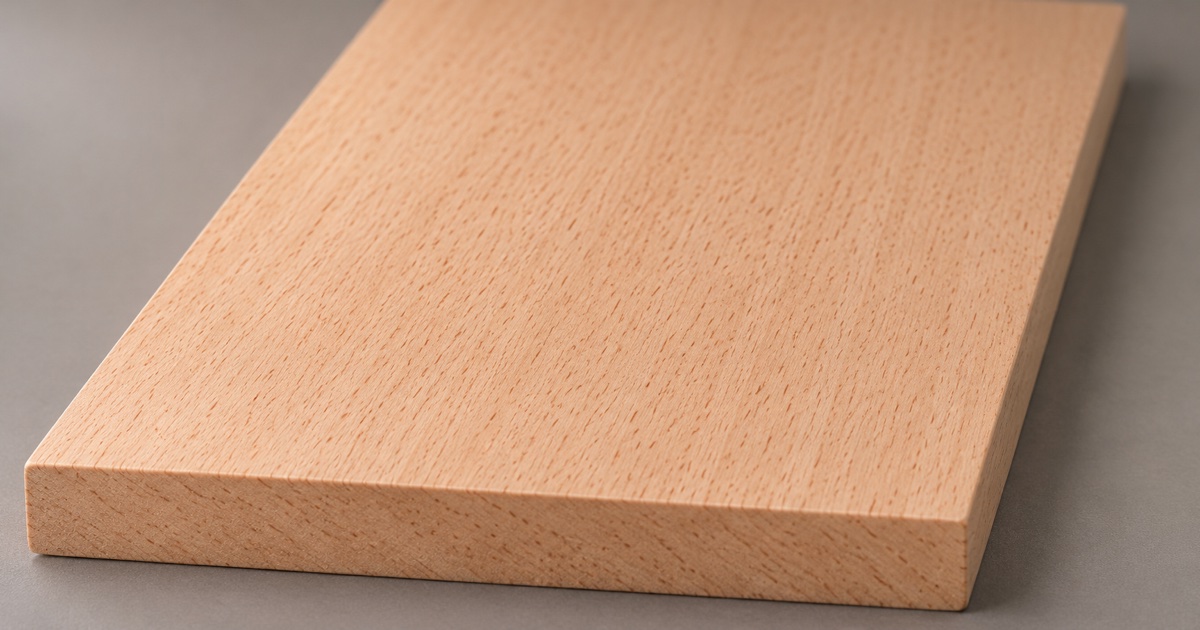
European beech is a pale, hard, close-grained hardwood used for furniture, chairs, workbenches, tool handles, turnery and veneer. It steams and bends well, and is often sold steamed to a pinkish tone. American beech is a close relative used in similar ways.
Health hazards
-
Asthma / respiratory allergy
Evidence: Confirmed in clinical testing
Workers with nasal allergy to European beech dust have been confirmed by specific provocation testing and case reports. In Danish furniture workers about 3% had IgE antibodies to beech, though this was mostly not linked to symptoms.1234
- Effects
- rhinitis, allergic sensitization
- Exposure route
- inhalation
- From
- dust
-
Respiratory irritation
Evidence: Listed by an agency
UK HSE lists reduced lung function for beech. A French study of beech and oak furniture workers found more sore throat and twitchy airways as dust levels rose.56
- Effects
- decreased lung function, sore throat, bronchial hyperresponsiveness
- Exposure route
- inhalation
- From
- dust
-
Skin irritation
Evidence: Listed by an agency
UK HSE lists dermatitis among the reported effects of beech. The mechanism (irritant or allergic) is not specified.5
- Effects
- dermatitis
- Exposure route
- skin
- From
- dust
-
Eye irritation
Evidence: Listed by an agency
UK HSE lists eye irritation for beech and notes that lichens growing on the bark may be responsible.5
- Effects
- eye irritation
- Exposure route
- eyes
- From
- dust, bark
-
Cancer
Evidence: Applies to all wood dust
IARC classifies all wood dust as carcinogenic to humans, mainly linked to cancer of the nasal cavity and sinuses after long, heavy exposure. This applies to this wood like any other.7
- Effects
- nasal and sinus cancer
- Exposure route
- inhalation
- From
- dust
-
Cancer
Evidence: Listed by an agency
ACGIH names beech dust specifically as a confirmed human carcinogen (A1), the same class it gives oak.8
- Effects
- nasal and sinus cancer
- Exposure route
- inhalation
- From
- dust
Not finding a hazard listed here does not mean this wood is safe. All wood dust is hazardous; see how to protect yourself.
Exposure limits
| Body | Limit | Notes |
|---|---|---|
| ACGIH TLV | 1 mg/m³ (inhalable) | 8-hour TWA; ACGIH value as restated by OSHA. source |
| EU binding limit (hardwood) | 2 mg/m³ | Applies to all hardwood dust |
| UK WEL (hardwood) | 3 mg/m³ | Applies to all hardwood dust |
| NIOSH REL | 1 mg/m³ | Recommended limit for all wood dust |
Cancer classifications
- ACGIH: A1 source
Sources
- De Zotti R, Gubian F. Asthma and rhinitis in wood workers. Allergy Asthma Proc. 1996;17(4):199-203. Link
- Hernandez M, Sánchez-Hernandez MC, Moreno V, Guardia P, Delgado J, Marañón F, Fernandez-Caldas E, Conde J. Occupational rhinitis caused by beech wood dust. Allergy. 1999;54(4):405-406. Link
- Schlünssen V, Kespohl S, Jacobsen G, Raulf-Heimsoth M, Schaumburg I, Sigsgaard T. Immunoglobulin E-mediated sensitization to pine and beech dust in relation to wood dust exposure levels and respiratory symptoms in the furniture industry. Scand J Work Environ Health. 2011;37(2):159-167. Link
- Kespohl S, Schlünssen V, Jacobsen G, Schaumburg I, Maryska S, Meurer U, Brüning T, Sigsgaard T, Raulf-Heimsoth M. Impact of cross-reactive carbohydrate determinants on wood dust sensitization. Clin Exp Allergy. 2010;40(7):1099-1106. Link
- Health and Safety Executive. Toxic woods. Woodworking Information Sheet No 30 (Revision 1), WIS30(rev1). HSE; first published 11/2012. Withdrawn from hse.gov.uk (404 since c. Jan 2020); archived copy cited. Link
- Bohadana AB, Massin N, Wild P, Toamain JP, Engel S, Goutet P. Symptoms, airway responsiveness, and exposure to dust in beech and oak wood workers. Occup Environ Med. 2000;57(4):268-73. Link
- IARC Working Group on the Evaluation of Carcinogenic Risks to Humans. Wood Dust and Formaldehyde. IARC Monographs on the Evaluation of Carcinogenic Risks to Humans, Vol. 62. Lyon: International Agency for Research on Cancer; 1995. Link
- US Occupational Safety and Health Administration. Occupational Chemical Database: Wood Dust. Last updated 06/23/2023. Link
Last reviewed .