Black locust
Robinia pseudoacacia · Fabaceae · hardwood
Also known as: locust, false acacia, robinia, acacia (European trade name)
Region: Native to the eastern United States; widely naturalized and planted in Europe and Asia
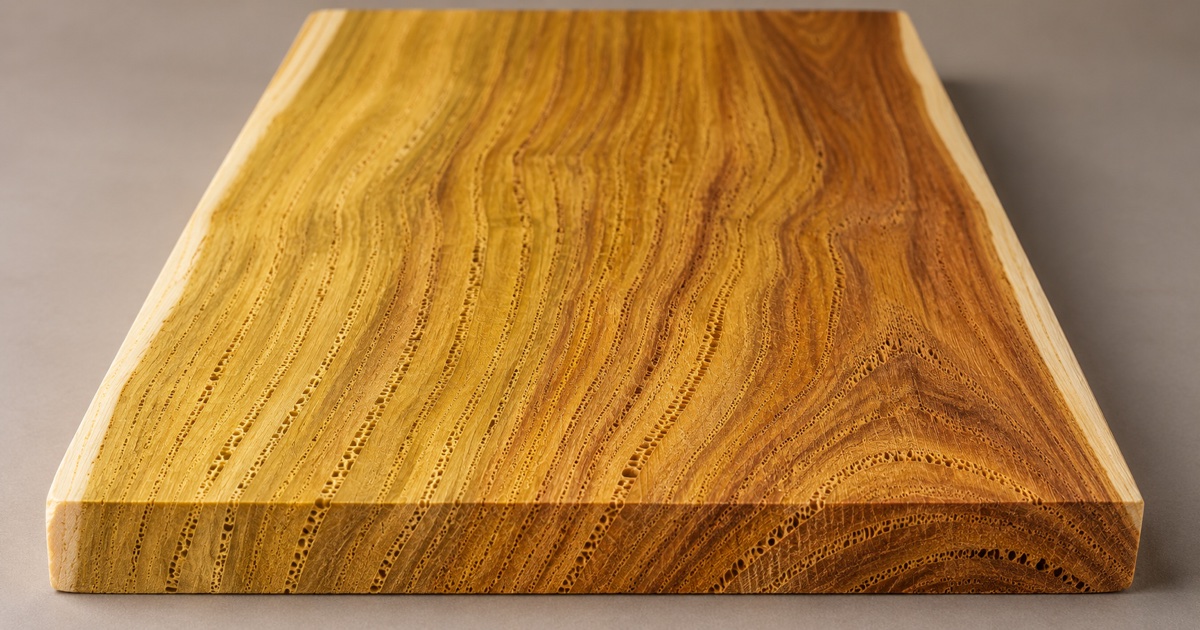
Black locust is a very hard, heavy and rot-resistant hardwood used for fence posts, outdoor furniture, decking, playground equipment, boat parts and turning. In Europe it is often sold as 'acacia'.
Health hazards
-
Asthma / respiratory allergy
Evidence: Confirmed in clinical testing
A German report identified new wood allergens in black locust dust using antibodies from a worker with occupational respiratory allergy. Details of the challenge testing were not available to us.1
- Effects
- asthma, allergic sensitization
- Exposure route
- inhalation
- From
- dust
-
Cancer
Evidence: Applies to all wood dust
IARC classifies all wood dust as carcinogenic to humans, mainly linked to cancer of the nasal cavity and sinuses after long, heavy exposure. This applies to this wood like any other.2
- Effects
- nasal and sinus cancer
- Exposure route
- inhalation
- From
- dust
Not finding a hazard listed here does not mean this wood is safe. All wood dust is hazardous; see how to protect yourself.
Exposure limits
| Body | Limit | Notes |
|---|---|---|
| ACGIH TLV | 1 mg/m³ (inhalable) | 8-hour TWA; ACGIH value as restated by OSHA. source |
| EU binding limit (hardwood) | 2 mg/m³ | Applies to all hardwood dust |
| UK WEL (hardwood) | 3 mg/m³ | Applies to all hardwood dust |
| NIOSH REL | 1 mg/m³ | Recommended limit for all wood dust |
Cancer classifications
- ACGIH: A4 source
Sources
- Kespohl S, Merget R, Overlack A, Bruening T, Raulf-Heimsoth M. Detection of novel occupational wood allergens in locust wood dust (Robinia pseudoacacia L.). J Allergy Clin Immunol. 2006;118(2):522-524. Erratum in: J Allergy Clin Immunol. 2006;118(5):1189. Link
- IARC Working Group on the Evaluation of Carcinogenic Risks to Humans. Wood Dust and Formaldehyde. IARC Monographs on the Evaluation of Carcinogenic Risks to Humans, Vol. 62. Lyon: International Agency for Research on Cancer; 1995. Link
- US Occupational Safety and Health Administration. Occupational Chemical Database: Wood Dust. Last updated 06/23/2023. Link
Last reviewed .