Cabreuva
Myrocarpus fastigiatus · Fabaceae · hardwood
Also known as: cabreúva, oleo pardo
Region: South America (mainly Brazil)
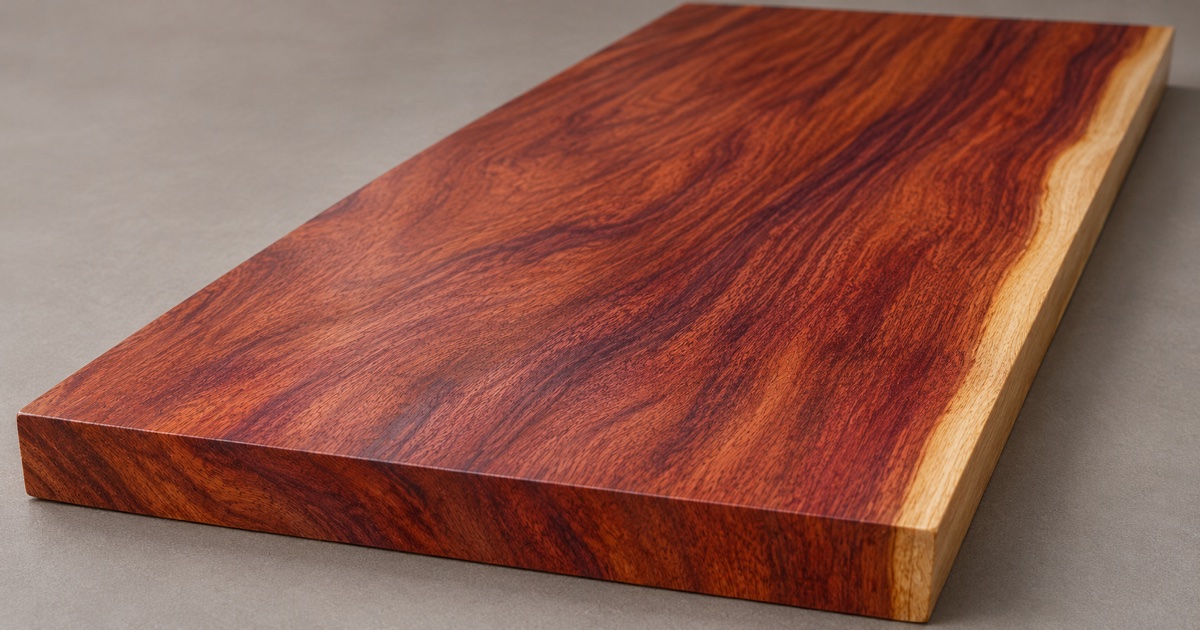
Cabreuva is a hard, heavy, aromatic South American hardwood with reddish to purplish-brown heartwood. In Europe it has mainly been used for parquet and other flooring.
Health hazards
-
Asthma / respiratory allergy
Evidence: Confirmed in clinical testing
A parquet floor layer had a delayed asthma attack when challenged with cabreuva dust in hospital, while a control challenge with fir dust was negative. A later case report describes rhinitis and asthma from the same wood.12
- Effects
- asthma, rhinitis
- Exposure route
- inhalation
- From
- dust
-
Whole-body (systemic) effects
Evidence: Confirmed in clinical testing
In the same patient, the hospital challenge with cabreuva dust also caused fever, vomiting, and muscle aches. Such whole-body reactions to wood dust appear to be rare.1
- Effects
- fever, vomiting, muscle pain, raised white blood cell count
- Exposure route
- inhalation
- From
- dust
-
Hypersensitivity pneumonitis
Evidence: Reported
An inflammatory lung reaction (allergic alveolitis) has been reported after exposure to cabreuva dust. How the diagnosis was confirmed could not be checked.3
- Effects
- extrinsic allergic alveolitis
- Exposure route
- inhalation
- From
- dust
-
Cancer
Evidence: Applies to all wood dust
All wood dust, including cabreuva, is classified by IARC as carcinogenic to humans, mainly linked to cancers of the nose and sinuses after long-term exposure.4
- Effects
- nasal and sinus cancer
- Exposure route
- inhalation
- From
- dust
Not finding a hazard listed here does not mean this wood is safe. All wood dust is hazardous; see how to protect yourself.
Exposure limits
| Body | Limit | Notes |
|---|---|---|
| ACGIH TLV | 1 mg/m³ (inhalable) | source |
| EU binding limit (hardwood) | 2 mg/m³ | Applies to all hardwood dust |
| UK WEL (hardwood) | 3 mg/m³ | Applies to all hardwood dust |
| NIOSH REL | 1 mg/m³ | Recommended limit for all wood dust |
Cancer classifications
- ACGIH: A4 source
Sources
- Innocenti A, Romeo R, Mariano A. Asthma and systemic toxic reaction due to cabreuva (Myrocarpus fastigiatus Fr. All.) wood dust. Med Lav. 1991;82(5):446-450. Link
- Pala G, Pignatti P, Perfetti L, Avanzini MA, Calcagno G, Preziosi D, Moscato G. Occupational rhinitis and asthma due to cabreuva wood dust. Ann Allergy Asthma Immunol. 2010;104(3):268-269. Link
- Baur X, Gahnz G, Chen Z. Extrinsic allergic alveolitis caused by cabreuva wood dust. J Allergy Clin Immunol. 2000;106(4):780-781. Link
- IARC Working Group on the Evaluation of Carcinogenic Risks to Humans. Wood Dust and Formaldehyde. IARC Monographs on the Evaluation of Carcinogenic Risks to Humans, Vol. 62. Lyon: International Agency for Research on Cancer; 1995. Link
- US Occupational Safety and Health Administration. Occupational Chemical Database: Wood Dust. Last updated 06/23/2023. Link
Last reviewed .