Eastern white cedar
Thuja occidentalis · Cupressaceae · softwood
Also known as: northern white cedar, white cedar, eastern arborvitae, arborvitae
Region: Eastern Canada and the northeastern and Great Lakes United States
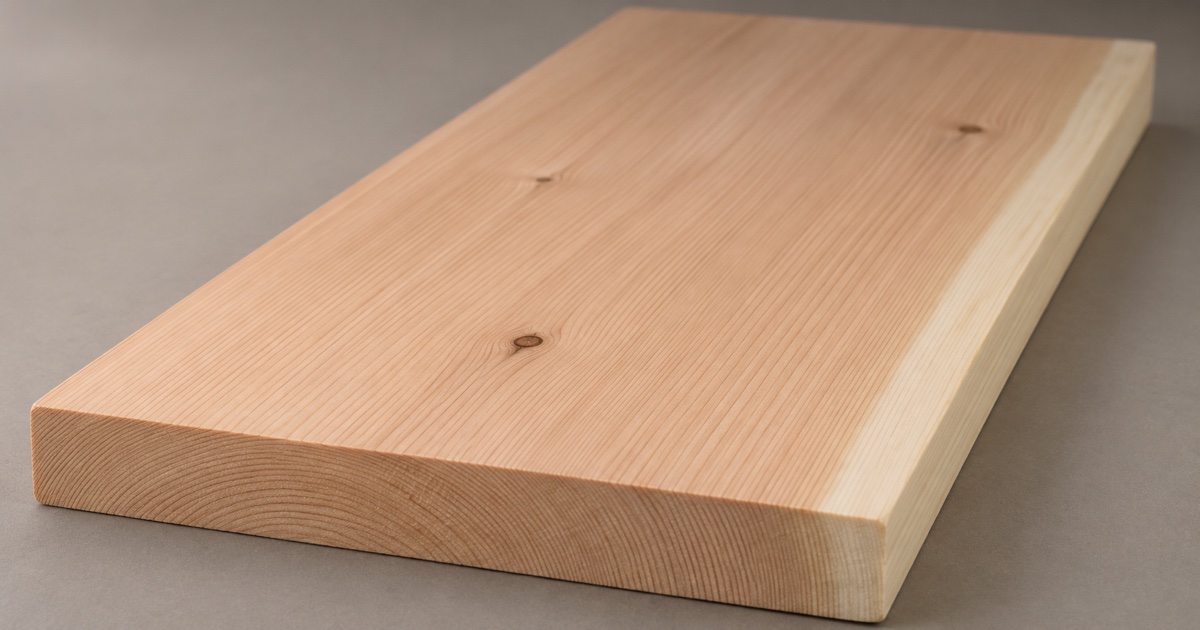
Eastern white cedar is a light, soft, aromatic, decay-resistant softwood from eastern North America. It is used for shingles, fencing, log homes, canoes, and outdoor projects.
Health hazards
-
Cancer
Evidence: Applies to all wood dust
IARC classifies all wood dust as carcinogenic to humans, mainly linked to cancer of the nasal cavity and sinuses after long-term heavy exposure. This applies to every species, so dust control matters whatever you cut.1
- Effects
- nasal and sinus cancer
- Exposure route
- inhalation
- From
- dust
-
Asthma / respiratory allergy
Evidence: Confirmed in clinical testing
Quebec shingle-mill workers developed asthma from eastern white cedar dust, confirmed by specific inhalation challenge, and plicatic acid (the red cedar asthma agent) was shown to be the cause. About 4 to 7 percent of workers at one sawmill had confirmed occupational asthma.23
- Effects
- occupational asthma
- Exposure route
- inhalation
- From
- dust
Not finding a hazard listed here does not mean this wood is safe. All wood dust is hazardous; see how to protect yourself.
Exposure limits
| Body | Limit | Notes |
|---|---|---|
| ACGIH TLV | 1 mg/m³ (inhalable) | 8-hour time-weighted average, as restated by OSHA source |
| UK WEL (softwood) | 5 mg/m³ | Applies to all softwood dust |
| NIOSH REL | 1 mg/m³ | Recommended limit for all wood dust |
Cancer classifications
- ACGIH: A4 source
Known compounds
- plicatic acid: causal agent of asthma; present at roughly half the level found in western red cedar source
Sources
- IARC Working Group on the Evaluation of Carcinogenic Risks to Humans. Wood Dust and Formaldehyde. IARC Monographs on the Evaluation of Carcinogenic Risks to Humans, Vol. 62. Lyon: International Agency for Research on Cancer; 1995. Link
- Cartier A, Chan H, Malo JL, Pineau L, Tse KS, Chan-Yeung M. Occupational asthma caused by eastern white cedar (Thuja occidentalis) with demonstration that plicatic acid is present in this wood dust and is the causal agent. J Allergy Clin Immunol. 1986;77(4):639-45. Link
- Malo JL, Cartier A, L'Archeveque J, Trudeau C, Courteau JP, Bherer L. Prevalence of occupational asthma among workers exposed to eastern white cedar. Am J Respir Crit Care Med. 1994;150(6 Pt 1):1697-701. Link
- US Occupational Safety and Health Administration. Occupational Chemical Database: Wood Dust. Last updated 06/23/2023. Link
Last reviewed .