Ipe
Handroanthus spp. · Bignoniaceae · hardwood
Also known as: ipê, lapacho, bethabara, Brazilian walnut (decking trade name), pau d'arco
Region: Central and South America
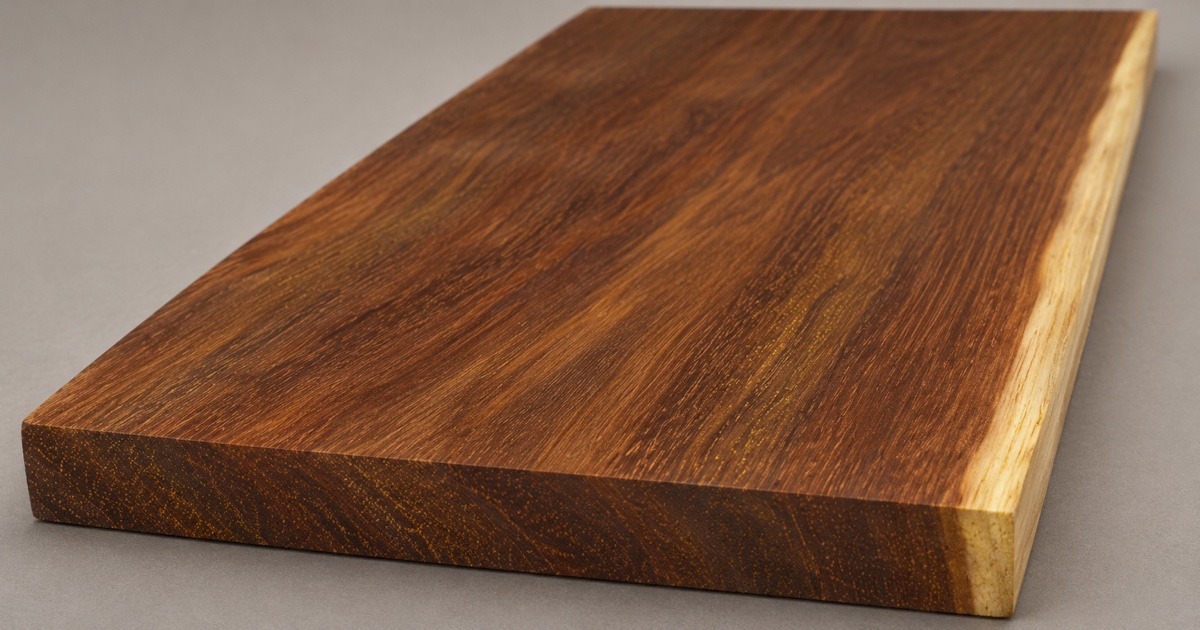
Ipe is an extremely hard, dense, and durable timber from several Handroanthus species (formerly placed in Tabebuia), mainly H. serratifolius and H. impetiginosus. It is best known for outdoor decking, boardwalks, and docks, and is also used for flooring and turning. Its hardness and fine dust make it hard on tools and dusty to machine.
Health hazards
-
Asthma / respiratory allergy
Evidence: Confirmed in clinical testing
A worker developed occupational asthma from ipe dust, confirmed when a controlled bronchial challenge with the dust triggered a delayed asthma attack. A separate report describes asthma from bethabara, a trade name for ipe.12
- Effects
- asthma
- Exposure route
- inhalation
- From
- dust
-
Skin allergy
Evidence: Reported
A construction worker developed recurring patches of skin inflammation and darkening linked to handling ipe. Ipe contains naphthoquinones, a class of compounds known to sensitize skin.31
- Effects
- fixed skin eruption, dermatitis
- Exposure route
- skin
- From
- dust, heartwood
-
Cancer
Evidence: Applies to all wood dust
All wood dust, including ipe, is classified by IARC as carcinogenic to humans, mainly linked to cancers of the nose and sinuses after long-term exposure.4
- Effects
- nasal and sinus cancer
- Exposure route
- inhalation
- From
- dust
Not finding a hazard listed here does not mean this wood is safe. All wood dust is hazardous; see how to protect yourself.
Exposure limits
| Body | Limit | Notes |
|---|---|---|
| ACGIH TLV | 1 mg/m³ (inhalable) | source |
| EU binding limit (hardwood) | 2 mg/m³ | Applies to all hardwood dust |
| UK WEL (hardwood) | 3 mg/m³ | Applies to all hardwood dust |
| NIOSH REL | 1 mg/m³ | Recommended limit for all wood dust |
Cancer classifications
- ACGIH: A4 source
Known compounds
- naphthoquinones: skin sensitizers (class) source
Sources
- Algranti E, Mendonca EM, Ali SA, Kokron CM, Raile V. Occupational asthma caused by Ipe (Tabebuia spp) dust. J Investig Allergol Clin Immunol. 2005;15(1):81-83. Link
- Yacoub MR, Lemiere C, Labrecque M, Malo JL. Occupational asthma due to bethabara wood dust. Allergy. 2005;60(12):1544-1545. Link
- Landry Q, Bourrain JL, Raison-Peyron N, Dereure O, Du-Thanh A. Occupational fixed drug eruption with ipe wood. Contact Dermatitis. 2018;79(3):186-188. Link
- IARC Working Group on the Evaluation of Carcinogenic Risks to Humans. Wood Dust and Formaldehyde. IARC Monographs on the Evaluation of Carcinogenic Risks to Humans, Vol. 62. Lyon: International Agency for Research on Cancer; 1995. Link
- US Occupational Safety and Health Administration. Occupational Chemical Database: Wood Dust. Last updated 06/23/2023. Link
Last reviewed .