Iroko
Milicia excelsa · Moraceae · hardwood
Also known as: African teak, odum, mvule, kambala, Milicia excelsa, Chlorophora excelsa
Region: Tropical Africa, from West Africa to East Africa
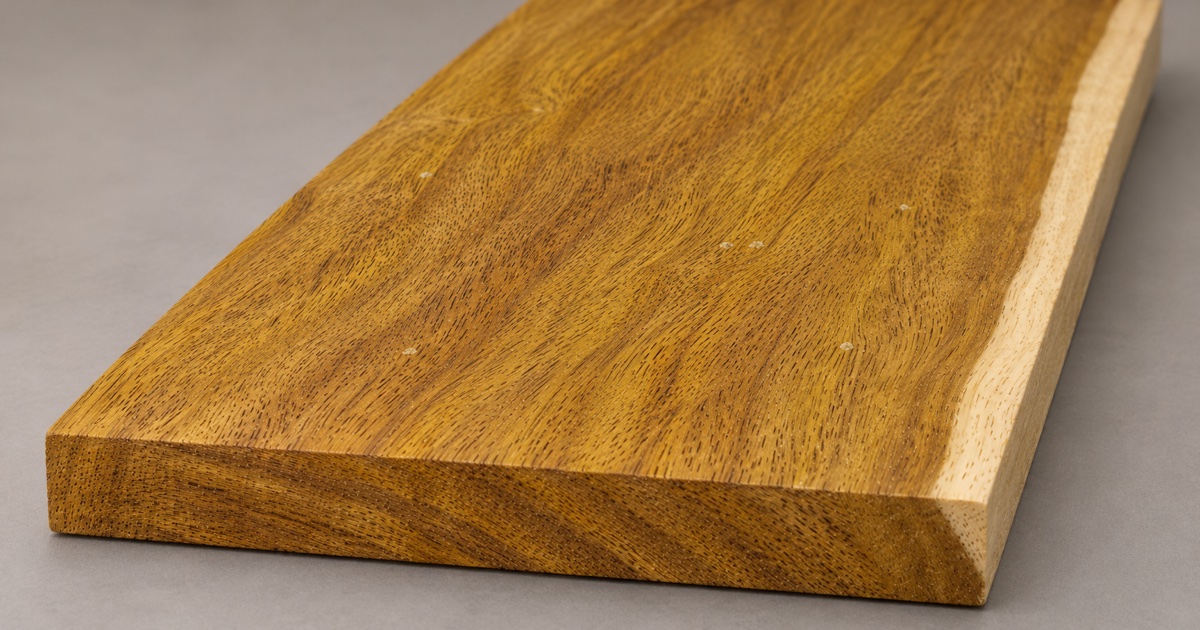
Iroko is a durable, yellow-brown African hardwood that darkens with age and is often used as a cheaper substitute for teak. Woodworkers use it for outdoor furniture, boat work, worktops, joinery and flooring.
Health hazards
-
Asthma / respiratory allergy
Evidence: Confirmed in clinical testing
Iroko dust is a confirmed cause of occupational asthma. In an Italian study all nine affected woodworkers had asthma reactions when challenged with iroko dust in the clinic, and a Spanish case was confirmed the same way.1234
- Effects
- asthma
- Exposure route
- inhalation
- From
- dust
-
Hypersensitivity pneumonitis
Evidence: Listed by an agency
The UK safety regulator names iroko as one of the woods that can rarely cause allergic alveolitis, a flu-like lung inflammation that can lead to lasting lung damage.4
- Effects
- extrinsic allergic alveolitis
- Exposure route
- inhalation
- From
- dust
-
Skin allergy
Evidence: Listed by an agency
Dermatitis from iroko is listed by the UK safety regulator, and case reports describe allergic skin rashes from iroko dust, including on the face from airborne dust.456
- Effects
- dermatitis, allergic contact dermatitis
- Exposure route
- skin
- From
- dust
-
Skin irritation
Evidence: Listed by an agency
The UK safety regulator lists nettle rash (hives) among the reported effects of iroko.4
- Effects
- contact urticaria (hives)
- Exposure route
- skin
- From
- dust
-
Cancer
Evidence: Applies to all wood dust
IARC classifies all wood dust as carcinogenic to humans, mainly linked to cancers of the nasal cavity and sinuses after long-term exposure.7
- Effects
- nasal and sinus cancer
- Exposure route
- inhalation
- From
- dust
Not finding a hazard listed here does not mean this wood is safe. All wood dust is hazardous; see how to protect yourself.
Exposure limits
| Body | Limit | Notes |
|---|---|---|
| ACGIH TLV | 1 mg/m³ (inhalable) | source |
| EU binding limit (hardwood) | 2 mg/m³ | Applies to all hardwood dust |
| UK WEL (hardwood) | 3 mg/m³ | Applies to all hardwood dust |
| NIOSH REL | 1 mg/m³ | Recommended limit for all wood dust |
Cancer classifications
- ACGIH: A4 source
Sources
- Ricciardi L, Fedele R, Saitta S, Tigano V, Mazzeo L, Fogliani O, Barber D, Isola S. Occupational asthma due to exposure to iroko wood dust. Ann Allergy Asthma Immunol. 2003;91(4):393-397. Link
- Azofra J, Olaguibel JM. Occupational asthma caused by iroko wood. Allergy. 1989;44(2):156-158. Link
- Pickering CA, Batten JC, Pepys J. Asthma due to inhaled wood dusts: western red cedar and iroko. Clin Allergy. 1972;2(3):213-218. Link
- Health and Safety Executive. Toxic woods. Woodworking Information Sheet No 30 (Revision 1), WIS30(rev1). HSE; first published 11/2012. Withdrawn from hse.gov.uk (404 since c. Jan 2020); archived copy cited. Link
- Hinnen U, Willa-Craps C, Elsner P. Allergic contact dermatitis from iroko and pine wood dust. Contact Dermatitis. 1995;33(6):428. Link
- Stingeni L, Mariotti M, Lisi P. Airborne allergic contact dermatitis from iroko (Chlorophora excelsa). Contact Dermatitis. 1998;38(5):287. Link
- IARC Working Group on the Evaluation of Carcinogenic Risks to Humans. Wood Dust and Formaldehyde. IARC Monographs on the Evaluation of Carcinogenic Risks to Humans, Vol. 62. Lyon: International Agency for Research on Cancer; 1995. Link
- US Occupational Safety and Health Administration. Occupational Chemical Database: Wood Dust. Last updated 06/23/2023. Link
Last reviewed .