Kejaat
Pterocarpus angolensis · Fabaceae · hardwood
Also known as: muninga, mukwa, bloodwood, kiaat
Region: Southern and south-central Africa
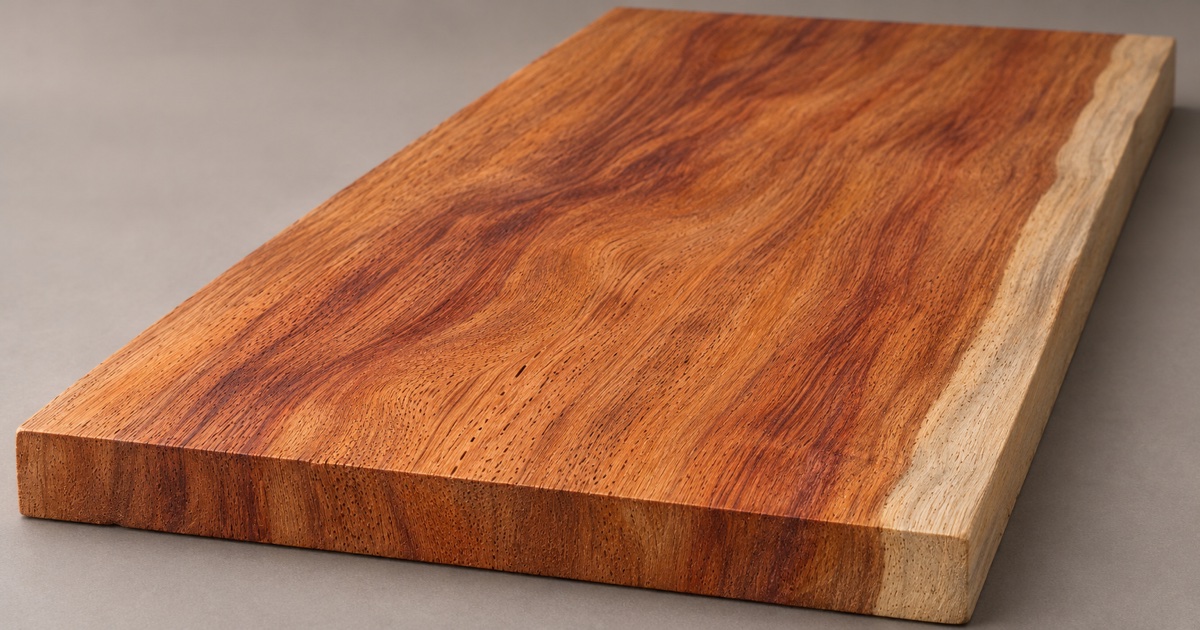
Kejaat (muninga) is a southern African hardwood with golden to reddish-brown heartwood, valued for furniture, flooring, carving and joinery because it is stable and works easily.
Health hazards
-
Asthma / respiratory allergy
Evidence: Reported
A 1949 South African report described asthma caused by breathing kejaat wood dust. We could not access the details of how it was confirmed, so treat this as a reported effect.1
- Effects
- asthma
- Exposure route
- inhalation
- From
- dust
-
Cancer
Evidence: Applies to all wood dust
All wood dust is classified as carcinogenic to humans, mainly linked to cancers of the nose and sinuses after long-term exposure. This applies to this wood like any other.2
- Effects
- nasal and sinus cancer
- Exposure route
- inhalation
- From
- dust
Not finding a hazard listed here does not mean this wood is safe. All wood dust is hazardous; see how to protect yourself.
Exposure limits
| Body | Limit | Notes |
|---|---|---|
| ACGIH TLV | 1 mg/m³ (inhalable) | Applies to wood dust generally; this species has no separate ACGIH value. source |
| EU binding limit (hardwood) | 2 mg/m³ | Applies to all hardwood dust |
| UK WEL (hardwood) | 3 mg/m³ | Applies to all hardwood dust |
| NIOSH REL | 1 mg/m³ | Recommended limit for all wood dust |
Cancer classifications
- ACGIH: A4 source
Sources
- Ordman D. Wood dust as an inhalant allergen; bronchial asthma caused by kejaat wood, Pterocarpus angolensis. S Afr Med J. 1949;23(49):973-975. Link
- IARC Working Group on the Evaluation of Carcinogenic Risks to Humans. Wood Dust and Formaldehyde. IARC Monographs on the Evaluation of Carcinogenic Risks to Humans, Vol. 62. Lyon: International Agency for Research on Cancer; 1995. Link
- US Occupational Safety and Health Administration. Occupational Chemical Database: Wood Dust. Last updated 06/23/2023. Link
Last reviewed .