Larch
Larix spp. · Pinaceae · softwood
Also known as: European larch, Siberian larch, tamarack, western larch, hackmatack
Region: Cool temperate and boreal forests of Europe, Asia and North America
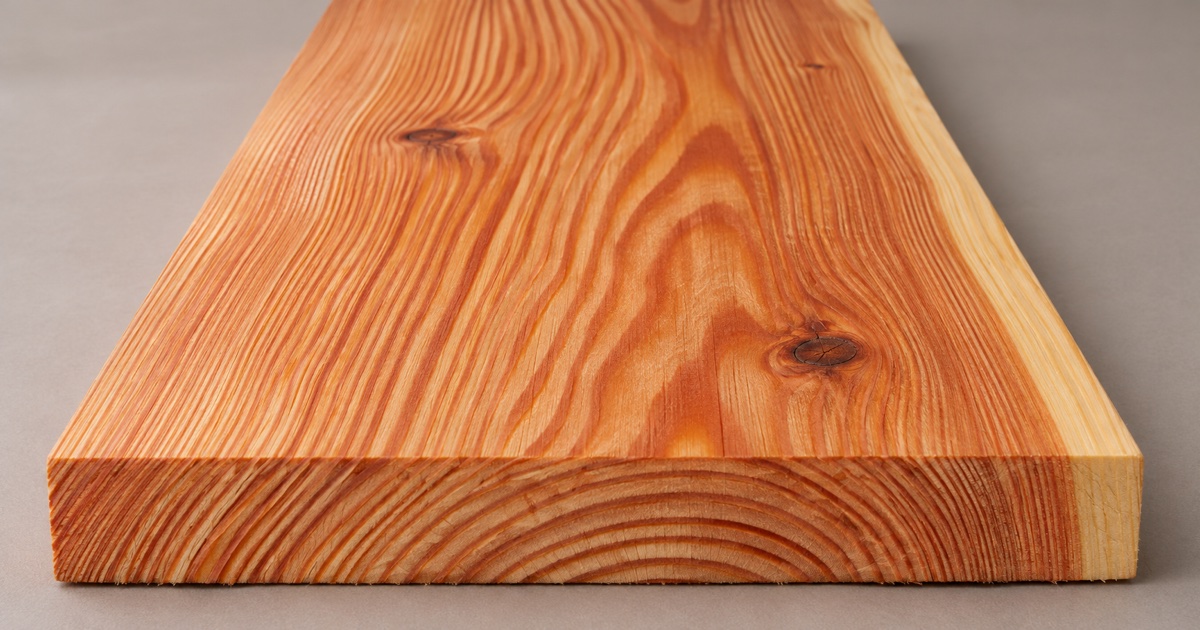
Larch is one of the hardest and most durable softwoods, used for cladding, fencing, decking, boat planking, stairs and flooring. European larch, Siberian larch, western larch and tamarack are the main species in trade.
Health hazards
-
Skin irritation
Evidence: Listed by an agency
The UK HSE lists nettle rash and dermatitis from larch, and notes the cause may be lichens growing on the bark rather than the wood itself.1
- Effects
- dermatitis, urticaria (nettle rash)
- Exposure route
- skin
- From
- dust, bark
-
Asthma / respiratory allergy
Evidence: Reported
A German carpenter with confirmed softwood allergy had IgE antibodies to larch as well as spruce and pine, but spruce was the main trigger. A larch-specific respiratory allergy has not been confirmed.2
- Effects
- IgE sensitization, occupational asthma (softwood)
- Exposure route
- inhalation
- From
- dust
-
Cancer
Evidence: Applies to all wood dust
All wood dust is classified as carcinogenic to humans, mainly linked to cancers of the nose and sinuses. This applies to this wood like every other species.3
- Effects
- nasal and sinus cancer
- Exposure route
- inhalation
- From
- dust
Not finding a hazard listed here does not mean this wood is safe. All wood dust is hazardous; see how to protect yourself.
Exposure limits
| Body | Limit | Notes |
|---|---|---|
| ACGIH TLV | 1 mg/m³ (inhalable) | source |
| UK WEL (softwood) | 5 mg/m³ | Applies to all softwood dust |
| NIOSH REL | 1 mg/m³ | Recommended limit for all wood dust |
Cancer classifications
- ACGIH: A4 source
Sources
- Health and Safety Executive. Toxic woods. Woodworking Information Sheet No 30 (Revision 1), WIS30(rev1). HSE; first published 11/2012. Withdrawn from hse.gov.uk (404 since c. Jan 2020); archived copy cited. Link
- Kespohl S, Kotschy-Lang N, Tomm JM, von Bergen M, Maryska S, Brüning T, et al. Occupational IgE-mediated softwood allergy: characterization of the causative allergen. Int Arch Allergy Immunol. 2012;157(2):202-8. Link
- IARC Working Group on the Evaluation of Carcinogenic Risks to Humans. Wood Dust and Formaldehyde. IARC Monographs on the Evaluation of Carcinogenic Risks to Humans, Vol. 62. Lyon: International Agency for Research on Cancer; 1995. Link
- US Occupational Safety and Health Administration. Occupational Chemical Database: Wood Dust. Last updated 06/23/2023. Link
Last reviewed .