Limba
Terminalia superba · Combretaceae · hardwood
Also known as: afara, korina, black limba, white limba, frake
Region: West and Central Africa
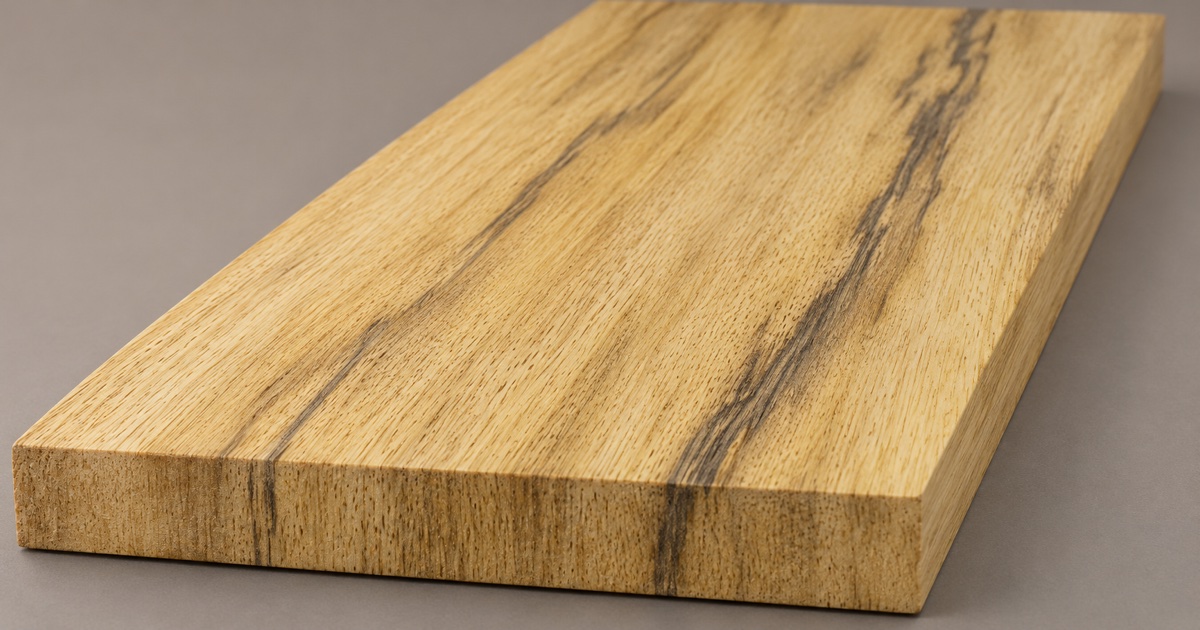
A light to medium-weight hardwood, pale yellowish-brown, with some logs showing dark grey-brown streaks sold as black limba. Used for furniture, frames, drawer sides, veneer, plywood, and electric guitar bodies.
Health hazards
-
Respiratory irritation
Evidence: Listed by an agency
HSE lists reduced lung function and bleeding from the nose and gums among reported effects of limba dust.1
- Effects
- decrease in lung function, nose bleeds, gum bleeding
- Exposure route
- inhalation
- From
- dust
-
Skin irritation
Evidence: Listed by an agency
HSE lists nettle rash (itchy, raised welts) from contact with limba.1
- Effects
- nettle rash
- Exposure route
- skin
- From
- dust
-
Splinter infection
Evidence: Listed by an agency
HSE notes that limba splinter wounds can turn septic.1
- Effects
- septic splinters
- Exposure route
- splinter
-
Asthma / respiratory allergy
Evidence: Reported
A review of wood allergy lists limba as a reported cause of occupational asthma, based on German case reports that could not be checked for this page.2
- Effects
- asthma
- Exposure route
- inhalation
- From
- dust
-
Cancer
Evidence: Applies to all wood dust
IARC classifies all wood dust as carcinogenic to humans, chiefly through cancers of the nose and sinuses. This applies to limba dust as it does to any other wood.3
- Effects
- nasal and sinus cancer
- Exposure route
- inhalation
- From
- dust
Not finding a hazard listed here does not mean this wood is safe. All wood dust is hazardous; see how to protect yourself.
Exposure limits
| Body | Limit | Notes |
|---|---|---|
| ACGIH TLV | 1 mg/m³ (inhalable) | source |
| EU binding limit (hardwood) | 2 mg/m³ | Applies to all hardwood dust |
| UK WEL (hardwood) | 3 mg/m³ | Applies to all hardwood dust |
| NIOSH REL | 1 mg/m³ | Recommended limit for all wood dust |
Cancer classifications
- ACGIH: A4 source
Sources
- Health and Safety Executive. Toxic woods. Woodworking Information Sheet No 30 (Revision 1), WIS30(rev1). HSE; first published 11/2012. Withdrawn from hse.gov.uk (404 since c. Jan 2020); archived copy cited. Link
- Schlünssen V, Sigsgaard T, Raulf-Heimsoth M, Kespohl S. Workplace exposure to wood dust and the prevalence of wood-specific sensitization. Allergol Select. 2018;2(1):101-110. Link
- IARC Working Group on the Evaluation of Carcinogenic Risks to Humans. Wood Dust and Formaldehyde. IARC Monographs on the Evaluation of Carcinogenic Risks to Humans, Vol. 62. Lyon: International Agency for Research on Cancer; 1995. Link
- US Occupational Safety and Health Administration. Occupational Chemical Database: Wood Dust. Last updated 06/23/2023. Link
Last reviewed .