Oak
Quercus spp. · Fagaceae · hardwood
Also known as: red oak, white oak, northern red oak, English oak, European oak, Quercus
Region: Northern Hemisphere; main lumber species from North America and Europe
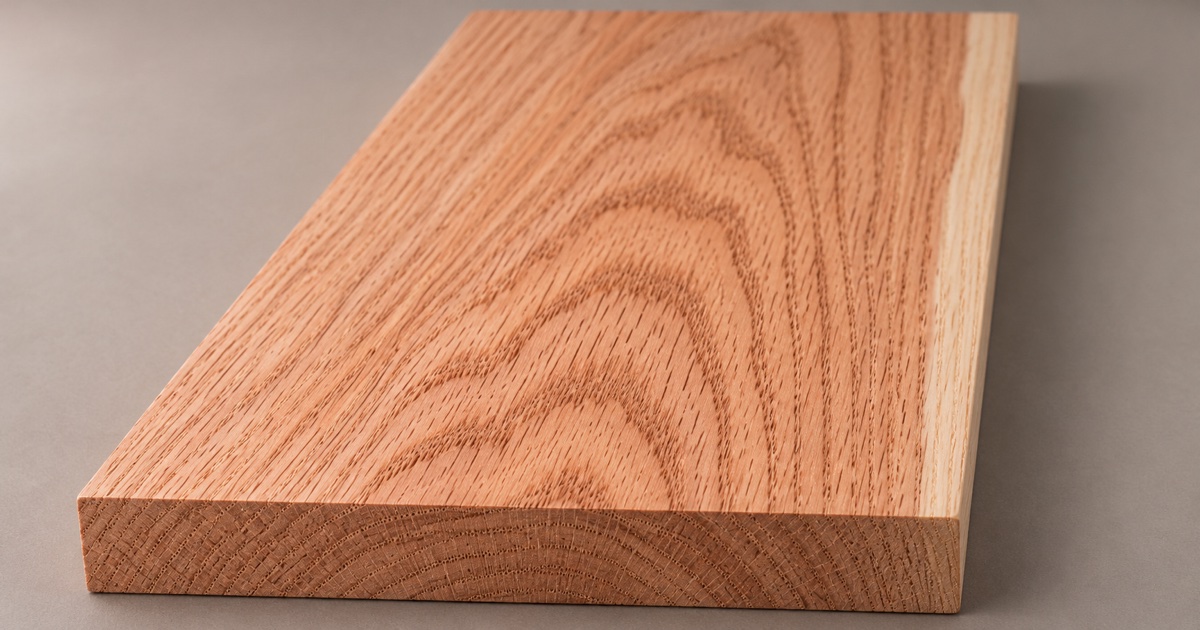
Oak is one of the most widely used furniture and flooring hardwoods, sold mainly as red oak (e.g. Quercus rubra) and white oak (e.g. Quercus alba, and European Quercus robur). It is strong, open-pored, and common in cabinetry, flooring, barrels, and joinery, so many woodworkers generate a lot of oak dust.
Health hazards
-
Cancer
Evidence: Applies to all wood dust
IARC classifies all wood dust as carcinogenic to humans, mainly linked to cancer of the nasal cavity and sinuses after long-term heavy exposure. This applies to every species, so dust control matters whatever you cut.1
- Effects
- nasal and sinus cancer
- Exposure route
- inhalation
- From
- dust
-
Cancer
Evidence: Listed by an agency
ACGIH names oak dust specifically as a confirmed human carcinogen (A1), one of only two woods with that class. The classification covers oak as a group rather than red or white oak separately.2
- Effects
- nasal and sinus cancer
- Exposure route
- inhalation
- From
- dust
-
Asthma / respiratory allergy
Evidence: Confirmed in clinical testing
Three workers in Quebec developed asthma from oak dust, confirmed by specific inhalation challenge in the lab. The species of oak is not given in the abstract; the UK HSE also lists asthma for oak in general.34
- Effects
- occupational asthma
- Exposure route
- inhalation
- From
- dust
-
Respiratory irritation
Evidence: Listed by an agency
The UK HSE lists sneezing for oak. A French study of beech and oak furniture workers found more sore throat and more twitchy airways as dust levels rose; it did not separate oak from beech.45
- Effects
- sneezing, sore throat, bronchial hyperresponsiveness
- Exposure route
- inhalation
- From
- dust
-
Eye irritation
Evidence: Listed by an agency
The UK HSE lists eye irritation as a reported effect of oak dust. We did not find a primary paper describing this for oak specifically.4
- Effects
- eye irritation
- Exposure route
- eyes
- From
- dust
Not finding a hazard listed here does not mean this wood is safe. All wood dust is hazardous; see how to protect yourself.
Exposure limits
| Body | Limit | Notes |
|---|---|---|
| ACGIH TLV | 1 mg/m³ (inhalable) | 8-hour time-weighted average, as restated by OSHA source |
| EU binding limit (hardwood) | 2 mg/m³ | Applies to all hardwood dust |
| UK WEL (hardwood) | 3 mg/m³ | Applies to all hardwood dust |
| NIOSH REL | 1 mg/m³ | Recommended limit for all wood dust |
Cancer classifications
- ACGIH: A1 source
Sources
- IARC Working Group on the Evaluation of Carcinogenic Risks to Humans. Wood Dust and Formaldehyde. IARC Monographs on the Evaluation of Carcinogenic Risks to Humans, Vol. 62. Lyon: International Agency for Research on Cancer; 1995. Link
- US Occupational Safety and Health Administration. Occupational Chemical Database: Wood Dust. Last updated 06/23/2023. Link
- Malo JL, Cartier A, Desjardins A, Van de Weyer R, Vandenplas O. Occupational asthma caused by oak wood dust. Chest. 1995;108(3):856-8. Link
- Health and Safety Executive. Toxic woods. Woodworking Information Sheet No 30 (Revision 1), WIS30(rev1). HSE; first published 11/2012. Withdrawn from hse.gov.uk (404 since c. Jan 2020); archived copy cited. Link
- Bohadana AB, Massin N, Wild P, Toamain JP, Engel S, Goutet P. Symptoms, airway responsiveness, and exposure to dust in beech and oak wood workers. Occup Environ Med. 2000;57(4):268-73. Link
Last reviewed .