Obeche
Triplochiton scleroxylon · Malvaceae · hardwood
Also known as: samba, wawa, ayous, abachi, African maple
Region: West and Central Africa
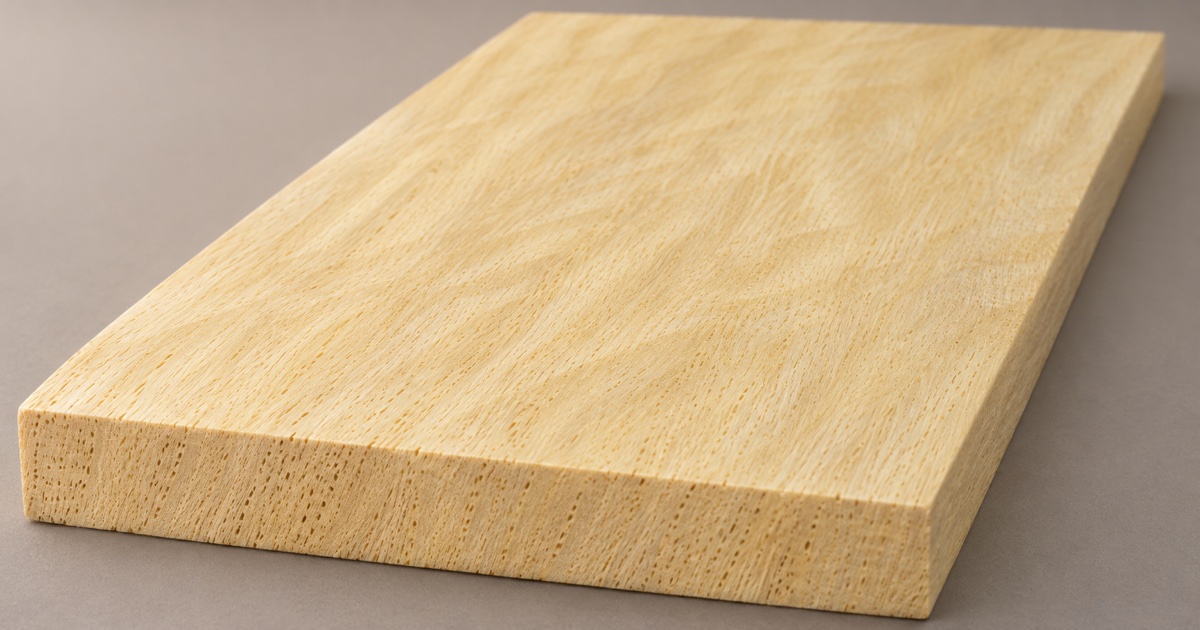
A light, soft, pale cream to straw-colored hardwood that is easy to cut and carve. Widely used for model making, sauna benches and panelling, mouldings, picture frames, and as a core or veneer wood.
Health hazards
-
Asthma / respiratory allergy
Evidence: Confirmed in clinical testing
Obeche is one of the best documented wood causes of allergic occupational asthma. Many workers have been confirmed by bronchial challenge plus skin or IgE tests, including a Finnish series in which 27 of 34 symptomatic workers had a positive challenge.12345
- Effects
- asthma, rhinitis, conjunctivitis
- Exposure route
- inhalation
- From
- dust
-
Skin allergy
Evidence: Confirmed in clinical testing
Hives where the wood or dust touches the skin have been confirmed in obeche-allergic workers with rubbing tests and specific IgE. People with obeche asthma may also react through the skin.67
- Effects
- contact urticaria (hives)
- Exposure route
- skin
- From
- dust
-
Skin irritation
Evidence: Listed by an agency
HSE lists skin irritation, nettle rash, and dermatitis from handling obeche articles.8
- Effects
- skin irritation, dermatitis, nettle rash
- Exposure route
- skin
- From
- dust
-
Respiratory irritation
Evidence: Listed by an agency
HSE also lists irritation of the airways, sneezing, wheezing, and feeling feverish among reported effects of obeche dust.8
- Effects
- respiratory tract irritation, sneezing, wheezing, feverishness
- Exposure route
- inhalation
- From
- dust
-
Cancer
Evidence: Applies to all wood dust
IARC classifies all wood dust as carcinogenic to humans, chiefly through cancers of the nose and sinuses. This applies to obeche dust as it does to any other wood.9
- Effects
- nasal and sinus cancer
- Exposure route
- inhalation
- From
- dust
Not finding a hazard listed here does not mean this wood is safe. All wood dust is hazardous; see how to protect yourself.
Exposure limits
| Body | Limit | Notes |
|---|---|---|
| ACGIH TLV | 1 mg/m³ (inhalable) | source |
| EU binding limit (hardwood) | 2 mg/m³ | Applies to all hardwood dust |
| UK WEL (hardwood) | 3 mg/m³ | Applies to all hardwood dust |
| NIOSH REL | 1 mg/m³ | Recommended limit for all wood dust |
Cancer classifications
- ACGIH: A4 source
Known compounds
Sources
- Hinojosa M, Moneo I, Dominguez J, Delgado E, Losada E, Alcover R. Asthma caused by African maple (Triplochiton scleroxylon) wood dust. J Allergy Clin Immunol. 1984;74(6):782-786. Link
- Hinojosa M, Losada E, Moneo I, Dominguez J, Carrillo T, Sanchez-Cano M. Occupational asthma caused by African maple (Obeche) and Ramin: evidence of cross reactivity between these two woods. Clin Allergy. 1986;16(2):145-153. Link
- Reijula K, Kujala V, Latvala J. Sauna builder's asthma caused by obeche (Triplochiton scleroxylon) dust. Thorax. 1994;49(6):622-623. Link
- Ferrer A, Maranon F, Casanovas M, Fernandez-Caldas E. Asthma from inhalation of Triplochiton scleroxylon (Samba) wood dust. J Investig Allergol Clin Immunol. 2001;11(3):199-203. Link
- Hannu T, Lindstrom I, Palmroos P, Kuuliala O, Sauni R. Prediction of obeche wood-induced asthma by specific skin prick testing. Occup Med (Lond). 2013;63(6):429-431. Link
- Hinojosa M, Subiza J, Moneo I, Puyana J, Diez ML, Fernandez-Rivas M. Contact urticaria caused by Obeche wood (Triplochiton scleroxylon). Report of eight patients. Ann Allergy. 1990;64(5):476-479. Link
- Kanerva L, Tuppurainen M, Keskinen H. Contact urticaria caused by obeche wood (Triplochiton scleroxylon). Contact Dermatitis. 1998;38(3):170-171. Link
- Health and Safety Executive. Toxic woods. Woodworking Information Sheet No 30 (Revision 1), WIS30(rev1). HSE; first published 11/2012. Withdrawn from hse.gov.uk (404 since c. Jan 2020); archived copy cited. Link
- IARC Working Group on the Evaluation of Carcinogenic Risks to Humans. Wood Dust and Formaldehyde. IARC Monographs on the Evaluation of Carcinogenic Risks to Humans, Vol. 62. Lyon: International Agency for Research on Cancer; 1995. Link
- US Occupational Safety and Health Administration. Occupational Chemical Database: Wood Dust. Last updated 06/23/2023. Link
- Kespohl S, Sander I, Merget R, Petersen A, Meyer HE, Sickmann A, Bruening T, Raulf-Heimsoth M. Identification of an obeche (Triplochiton scleroxylon) wood allergen as a class I chitinase. Allergy. 2005;60(6):808-814. Link
- Aranda A, Campo P, Palacin A, Dona I, Gomez-Casado C, Galindo L, Diaz-Perales A, Blanca M. Antigenic proteins involved in occupational rhinitis and asthma caused by obeche wood (Triplochiton scleroxylon). PLoS One. 2013;8(1):e53926. Link
Last reviewed .