Okoume
Aucoumea klaineana · Burseraceae · hardwood
Also known as: okoumé, gaboon, gaboon mahogany
Region: Central Africa (Gabon and neighboring countries)
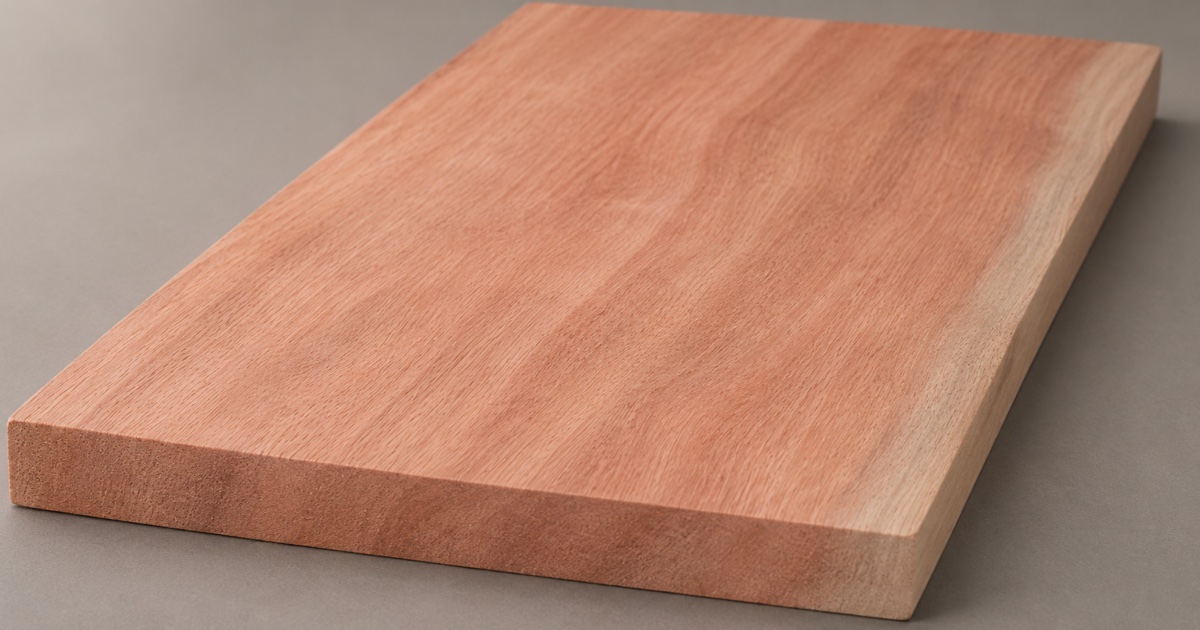
A light, soft, pinkish-brown hardwood that peels well into large veneers. Mostly met as plywood, especially marine and boatbuilding plywood, and as blockboard and veneer.
Health hazards
-
Asthma / respiratory allergy
Evidence: Listed by an agency
HSE lists asthma and cough among reported effects of gaboon (okoume). A wood-allergy review also lists it as a reported cause of occupational asthma, though the original case data were not available for checking.12
- Effects
- asthma, cough
- Exposure route
- inhalation
- From
- dust
-
Eye irritation
Evidence: Listed by an agency
HSE lists eye irritation from gaboon dust.1
- Effects
- eye irritation
- Exposure route
- eyes
- From
- dust
-
Skin irritation
Evidence: Listed by an agency
HSE lists skin effects, particularly on the hands and eyelids, from working with gaboon.1
- Effects
- skin effects on hands, skin effects on eyelids
- Exposure route
- skin
- From
- dust
-
Cancer
Evidence: Applies to all wood dust
IARC classifies all wood dust as carcinogenic to humans, chiefly through cancers of the nose and sinuses. This applies to okoume dust as it does to any other wood.3
- Effects
- nasal and sinus cancer
- Exposure route
- inhalation
- From
- dust
Not finding a hazard listed here does not mean this wood is safe. All wood dust is hazardous; see how to protect yourself.
Exposure limits
| Body | Limit | Notes |
|---|---|---|
| ACGIH TLV | 1 mg/m³ (inhalable) | source |
| EU binding limit (hardwood) | 2 mg/m³ | Applies to all hardwood dust |
| UK WEL (hardwood) | 3 mg/m³ | Applies to all hardwood dust |
| NIOSH REL | 1 mg/m³ | Recommended limit for all wood dust |
Cancer classifications
- ACGIH: A4 source
Sources
- Health and Safety Executive. Toxic woods. Woodworking Information Sheet No 30 (Revision 1), WIS30(rev1). HSE; first published 11/2012. Withdrawn from hse.gov.uk (404 since c. Jan 2020); archived copy cited. Link
- Schlünssen V, Sigsgaard T, Raulf-Heimsoth M, Kespohl S. Workplace exposure to wood dust and the prevalence of wood-specific sensitization. Allergol Select. 2018;2(1):101-110. Link
- IARC Working Group on the Evaluation of Carcinogenic Risks to Humans. Wood Dust and Formaldehyde. IARC Monographs on the Evaluation of Carcinogenic Risks to Humans, Vol. 62. Lyon: International Agency for Research on Cancer; 1995. Link
- US Occupational Safety and Health Administration. Occupational Chemical Database: Wood Dust. Last updated 06/23/2023. Link
Last reviewed .