Peroba
Aspidosperma polyneuron · Apocynaceae · hardwood
Also known as: peroba rosa, red peroba
Region: Brazil, Paraguay, Argentina
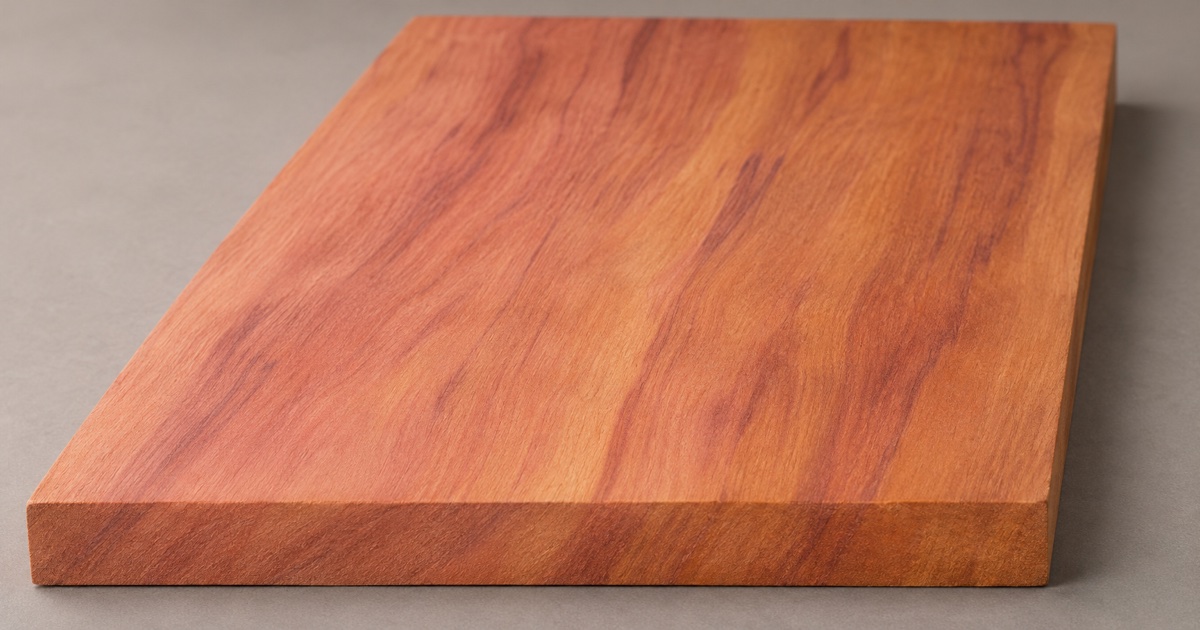
Peroba rosa is a moderately heavy Brazilian hardwood with rosy to yellowish-brown heartwood. It has long been used for construction, joinery, flooring, and furniture, and reclaimed peroba is popular for furniture today.
Health hazards
-
Skin irritation
Evidence: Listed by an agency
The UK HSE lists skin irritation and blistering among reported effects of peroba.1
- Effects
- skin irritation, blisters
- Exposure route
- skin
- From
- dust
-
Respiratory irritation
Evidence: Listed by an agency
Irritation of the moist linings of the nose, throat, and eyes is listed by the UK HSE for peroba.1
- Effects
- mucous membrane irritation
- Exposure route
- inhalation, eyes
- From
- dust
-
Whole-body (systemic) effects
Evidence: Listed by an agency
The UK HSE reports whole-body effects such as headache, nausea, stomach cramps, and weakness in people working with peroba.1
- Effects
- headache, nausea, stomach cramps, weakness
- Exposure route
- inhalation
- From
- dust
-
Cancer
Evidence: Applies to all wood dust
All wood dust, including peroba, is classified by IARC as carcinogenic to humans, mainly linked to cancers of the nose and sinuses after long-term exposure.2
- Effects
- nasal and sinus cancer
- Exposure route
- inhalation
- From
- dust
Not finding a hazard listed here does not mean this wood is safe. All wood dust is hazardous; see how to protect yourself.
Exposure limits
| Body | Limit | Notes |
|---|---|---|
| ACGIH TLV | 1 mg/m³ (inhalable) | source |
| EU binding limit (hardwood) | 2 mg/m³ | Applies to all hardwood dust |
| UK WEL (hardwood) | 3 mg/m³ | Applies to all hardwood dust |
| NIOSH REL | 1 mg/m³ | Recommended limit for all wood dust |
Cancer classifications
- ACGIH: A4 source
Sources
- Health and Safety Executive. Toxic woods. Woodworking Information Sheet No 30 (Revision 1), WIS30(rev1). HSE; first published 11/2012. Withdrawn from hse.gov.uk (404 since c. Jan 2020); archived copy cited. Link
- IARC Working Group on the Evaluation of Carcinogenic Risks to Humans. Wood Dust and Formaldehyde. IARC Monographs on the Evaluation of Carcinogenic Risks to Humans, Vol. 62. Lyon: International Agency for Research on Cancer; 1995. Link
- US Occupational Safety and Health Administration. Occupational Chemical Database: Wood Dust. Last updated 06/23/2023. Link
Last reviewed .