Pine
Pinus spp. · Pinaceae · softwood
Also known as: white pine, eastern white pine, Scots pine, yellow pine, southern yellow pine, ponderosa pine, radiata pine, redwood (European trade name for Scots pine), deal, Pinus
Region: Northern Hemisphere natively; radiata pine widely planted in the Southern Hemisphere
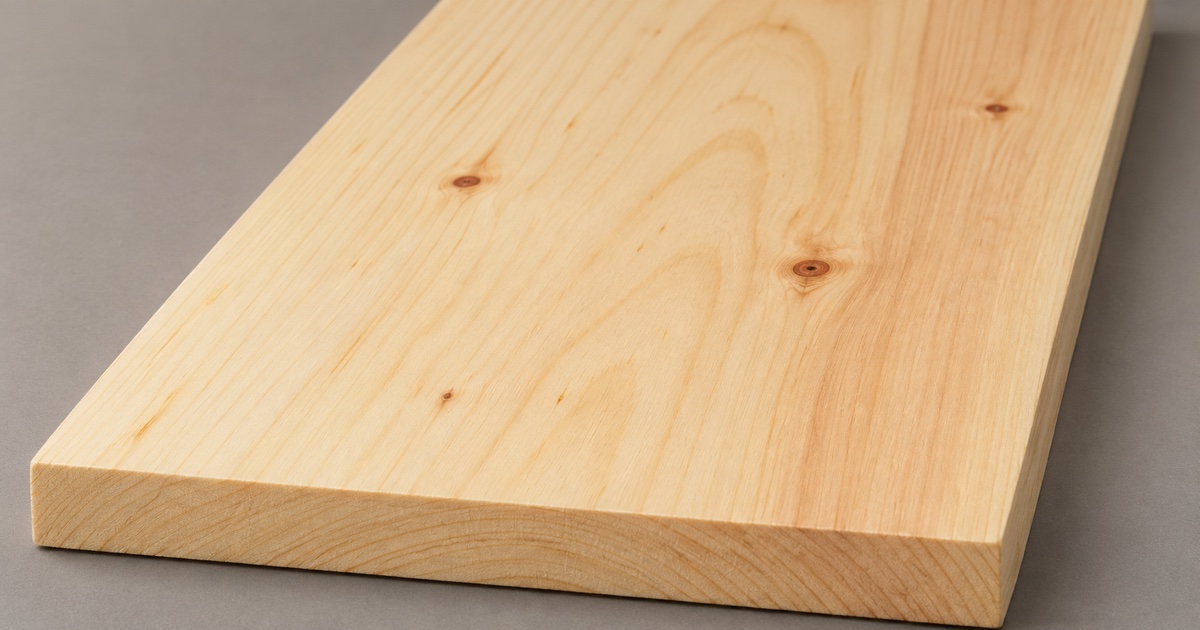
Pine is the most common construction and furniture softwood, including eastern white pine, southern yellow pines, Scots pine, and plantation radiata pine. It is used for framing, shelving, furniture, mouldings, and pallets, and many pines are resinous.
Health hazards
-
Cancer
Evidence: Applies to all wood dust
IARC classifies all wood dust as carcinogenic to humans, mainly linked to cancer of the nasal cavity and sinuses after long-term heavy exposure. This applies to every species, so dust control matters whatever you cut.1
- Effects
- nasal and sinus cancer
- Exposure route
- inhalation
- From
- dust
-
Asthma / respiratory allergy
Evidence: Confirmed in clinical testing
A small share of Danish furniture workers had IgE antibodies to pine dust, more often those with asthma, and a German carpenter's softwood allergy (spruce, pine, larch) was confirmed by skin and challenge tests. Allergy to pine protein appears uncommon.23
- Effects
- occupational asthma, IgE sensitization
- Exposure route
- inhalation
- From
- dust
-
Respiratory irritation
Evidence: Listed by an agency
The UK HSE lists a decrease in lung function for pine. New Zealand sawmill studies of radiata pine found more asthma symptoms, cough, and nose and eye irritation, and lower lung function at higher dust levels.456
- Effects
- reduced lung function, cough, asthma symptoms, nose irritation
- Exposure route
- inhalation
- From
- dust
-
Eye irritation
Evidence: Reported
Eye irritation was more common in New Zealand pine sawmill workers with higher exposure. This is a survey finding, not a confirmed allergy.5
- Effects
- eye irritation
- Exposure route
- eyes
- From
- dust
-
Skin allergy
Evidence: Confirmed in clinical testing
Pine resin contains colophony (rosin) and abietic acid, common skin allergens. Finnish and Australian patients reacted on patch testing to pine sawdust and colophony, and a German case followed contact with untreated pine furniture.789
- Effects
- allergic contact dermatitis, airborne dermatitis of face and hands
- Exposure route
- skin
- From
- dust, sap
-
Skin irritation
Evidence: Listed by an agency
The UK HSE lists skin irritation as a reported effect of pine dust, across many pine species.4
- Effects
- skin irritation
- Exposure route
- skin
- From
- dust
-
Sun sensitivity (photosensitization)
Evidence: Listed by an agency
The UK HSE notes that pine may cause photosensitisation, meaning skin reacts more strongly after sun exposure. We did not find a primary paper on this for pine.4
- Effects
- skin reaction made worse by sunlight
- Exposure route
- skin
- From
- dust
-
Hypersensitivity pneumonitis
Evidence: Reported
A Finnish report described allergic alveolitis (lung inflammation) linked to pine sawdust. Only the title is available on PubMed, so the testing and whether mold was involved are not confirmed.10
- Effects
- allergic alveolitis
- Exposure route
- inhalation
- From
- dust
Not finding a hazard listed here does not mean this wood is safe. All wood dust is hazardous; see how to protect yourself.
Exposure limits
| Body | Limit | Notes |
|---|---|---|
| ACGIH TLV | 1 mg/m³ (inhalable) | 8-hour time-weighted average, as restated by OSHA source |
| UK WEL (softwood) | 5 mg/m³ | Applies to all softwood dust |
| NIOSH REL | 1 mg/m³ | Recommended limit for all wood dust |
Cancer classifications
- ACGIH: A4 source
Known compounds
Sources
- IARC Working Group on the Evaluation of Carcinogenic Risks to Humans. Wood Dust and Formaldehyde. IARC Monographs on the Evaluation of Carcinogenic Risks to Humans, Vol. 62. Lyon: International Agency for Research on Cancer; 1995. Link
- Skovsted TA, Schlünssen V, Schaumburg I, Wang P, Staun-Olsen P, Skov PS. Only few workers exposed to wood dust are detected with specific IgE against pine wood. Allergy. 2003;58(8):772-9. Link
- Kespohl S, Kotschy-Lang N, Tomm JM, von Bergen M, Maryska S, Brüning T, et al. Occupational IgE-mediated softwood allergy: characterization of the causative allergen. Int Arch Allergy Immunol. 2012;157(2):202-8. Link
- Health and Safety Executive. Toxic woods. Woodworking Information Sheet No 30 (Revision 1), WIS30(rev1). HSE; first published 11/2012. Withdrawn from hse.gov.uk (404 since c. Jan 2020); archived copy cited. Link
- Douwes J, McLean D, Slater T, Pearce N. Asthma and other respiratory symptoms in New Zealand pine processing sawmill workers. Am J Ind Med. 2001;39(6):608-15. Link
- Douwes J, McLean D, Slater T, Travier N, Cheng S, Pearce N. Pine dust, atopy and lung function: A cross-sectional study in sawmill workers. Eur Respir J. 2006;28(4):791-8. Link
- Estlander T, Jolanki R, Alanko K, Kanerva L. Occupational allergic contact dermatitis caused by wood dusts. Contact Dermatitis. 2001;44(4):213-7. Link
- Cook DK, Freeman S. Allergic contact dermatitis to multiple sawdust allergens. Australas J Dermatol. 1997;38(2):77-9. Link
- Booken D, Velten FW, Utikal J, Goerdt S, Bayerl C. [Allergic contact dermatitis from colophony and turpentine in resins of untreated pine wood]. Hautarzt. 2006;57(11):1013-5. Link
- Malmström K, Savolainen J, Terho EO. Allergic alveolitis from pine sawdust. Allergy. 1999;54(5):532-3. Link
- US Occupational Safety and Health Administration. Occupational Chemical Database: Wood Dust. Last updated 06/23/2023. Link
Last reviewed .