Sapele
Entandrophragma cylindricum · Meliaceae · hardwood
Also known as: sapelli, sapeli, aboudikro, Entandrophragma cylindricum
Region: Tropical West and Central Africa
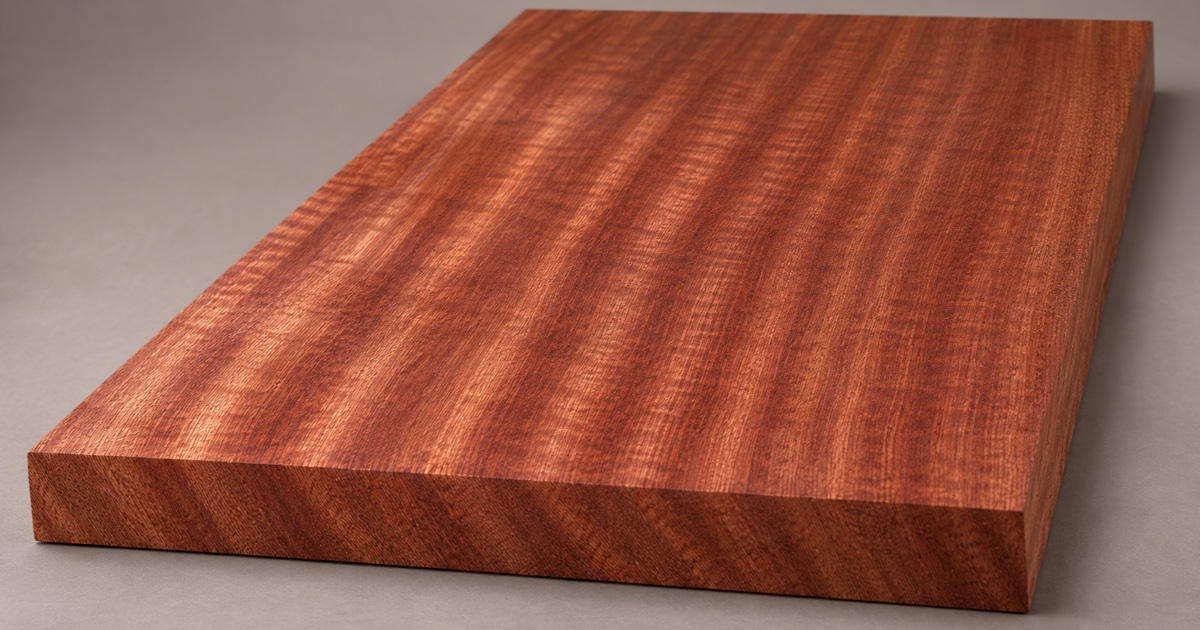
Sapele is a reddish-brown African hardwood related to mahogany, known for a striking ribbon stripe on quarter-sawn faces. It is used for furniture, cabinetry, doors, flooring, veneer, plywood and guitar backs and sides.
Health hazards
-
Skin irritation
Evidence: Listed by an agency
The UK safety regulator lists skin irritation among the reported effects of sapele.1
- Effects
- skin irritation
- Exposure route
- skin
- From
- dust
-
Asthma / respiratory allergy
Evidence: Reported
A Spanish case report describes a carpenter with work-related asthma from sapele dust, and a peer-reviewed review lists sapele among woods that cause occupational asthma. We have not yet confirmed what testing the case report used.23
- Effects
- asthma
- Exposure route
- inhalation
- From
- dust
-
Skin allergy
Evidence: Reported
The same Spanish report describes an allergic skin reaction to sapele dust alongside the asthma.2
- Effects
- contact dermatitis
- Exposure route
- skin
- From
- dust
-
Cancer
Evidence: Applies to all wood dust
IARC classifies all wood dust as carcinogenic to humans, mainly linked to cancers of the nasal cavity and sinuses after long-term exposure.4
- Effects
- nasal and sinus cancer
- Exposure route
- inhalation
- From
- dust
Not finding a hazard listed here does not mean this wood is safe. All wood dust is hazardous; see how to protect yourself.
Exposure limits
| Body | Limit | Notes |
|---|---|---|
| ACGIH TLV | 1 mg/m³ (inhalable) | source |
| EU binding limit (hardwood) | 2 mg/m³ | Applies to all hardwood dust |
| UK WEL (hardwood) | 3 mg/m³ | Applies to all hardwood dust |
| NIOSH REL | 1 mg/m³ | Recommended limit for all wood dust |
Cancer classifications
- ACGIH: A4 source
Sources
- Health and Safety Executive. Toxic woods. Woodworking Information Sheet No 30 (Revision 1), WIS30(rev1). HSE; first published 11/2012. Withdrawn from hse.gov.uk (404 since c. Jan 2020); archived copy cited. Link
- Alvarez-Cuesta C, Gala Ortiz G, Rodriguez Diaz E, Blanco Barrios S, Galache Osuna C, Raya Aguado C, Pineda F. Occupational asthma and IgE-mediated contact dermatitis from sapele wood. Contact Dermatitis. 2004;51(2):88-98. Link
- Schlünssen V, Sigsgaard T, Raulf-Heimsoth M, Kespohl S. Workplace exposure to wood dust and the prevalence of wood-specific sensitization. Allergol Select. 2018;2(1):101-110. Link
- IARC Working Group on the Evaluation of Carcinogenic Risks to Humans. Wood Dust and Formaldehyde. IARC Monographs on the Evaluation of Carcinogenic Risks to Humans, Vol. 62. Lyon: International Agency for Research on Cancer; 1995. Link
- US Occupational Safety and Health Administration. Occupational Chemical Database: Wood Dust. Last updated 06/23/2023. Link
Last reviewed .