Spruce
Picea spp. · Pinaceae · softwood
Also known as: Norway spruce, Sitka spruce, white spruce, whitewood, European whitewood, SPF (spruce-pine-fir)
Region: Northern temperate and boreal forests of Europe, Asia and North America
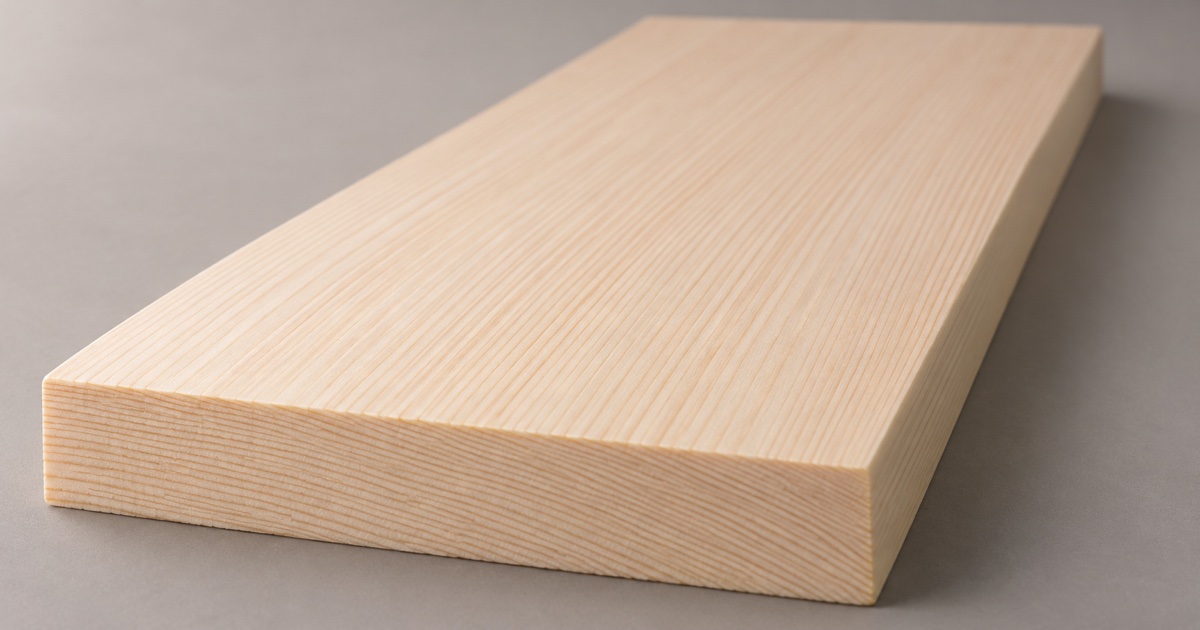
Spruce is a pale, light, straight-grained softwood sold as construction lumber, pallet stock and the 'S' in SPF framing. Norway spruce and Sitka spruce are also prized for guitar and violin soundboards.
Health hazards
-
Asthma / respiratory allergy
Evidence: Confirmed in clinical testing
A small number of workers have developed allergic asthma from spruce dust, confirmed by specific IgE antibodies to spruce and, in one carpenter, by challenge testing. The evidence comes from Norway spruce (Picea abies) and spruce used in Polish and German workshops.12
- Effects
- occupational asthma
- Exposure route
- inhalation
- From
- dust
-
Respiratory irritation
Evidence: Listed by an agency
The UK HSE lists spruce as a cause of respiratory problems. A Canadian study of sawmill workers handling pine and spruce found lower lung function and more wheeze than in a comparison group.34
- Effects
- respiratory disorders, reduced lung function, wheeze
- Exposure route
- inhalation
- From
- dust
-
Skin allergy
Evidence: Confirmed in clinical testing
Finnish workers exposed to pine or spruce dust developed allergic skin rashes, often on the face, and reacted on patch testing to the sawdust and to rosin (colophony). The reports do not always separate spruce from pine.56
- Effects
- allergic contact dermatitis
- Exposure route
- skin
- From
- dust
-
Sun sensitivity (photosensitization)
Evidence: Listed by an agency
The UK HSE notes that spruce may make skin more sensitive to sunlight. No primary report was found to confirm this.3
- Effects
- possible photosensitization
- Exposure route
- skin
- From
- dust
-
Cancer
Evidence: Applies to all wood dust
All wood dust is classified as carcinogenic to humans, mainly linked to cancers of the nose and sinuses. This applies to this wood like every other species.7
- Effects
- nasal and sinus cancer
- Exposure route
- inhalation
- From
- dust
Not finding a hazard listed here does not mean this wood is safe. All wood dust is hazardous; see how to protect yourself.
Exposure limits
| Body | Limit | Notes |
|---|---|---|
| ACGIH TLV | 1 mg/m³ (inhalable) | source |
| UK WEL (softwood) | 5 mg/m³ | Applies to all softwood dust |
| NIOSH REL | 1 mg/m³ | Recommended limit for all wood dust |
Cancer classifications
- ACGIH: A4 source
Known compounds
Sources
- Wittczak T, Dudek W, Walusiak-Skorupa J, Bochenska-Marciniak M, Nowakowska-Swirta E, Kuna P, Palczynski C. Occupational asthma due to spruce wood. Occup Med (Lond). 2012;62(4):301-304. Link
- Kespohl S, Kotschy-Lang N, Tomm JM, von Bergen M, Maryska S, Brüning T, et al. Occupational IgE-mediated softwood allergy: characterization of the causative allergen. Int Arch Allergy Immunol. 2012;157(2):202-8. Link
- Health and Safety Executive. Toxic woods. Woodworking Information Sheet No 30 (Revision 1), WIS30(rev1). HSE; first published 11/2012. Withdrawn from hse.gov.uk (404 since c. Jan 2020); archived copy cited. Link
- Hessel PA, Herbert FA, Melenka LS, Yoshida K, Michaelchuk D, Nakaza M. Lung health in sawmill workers exposed to pine and spruce. Chest. 1995;108(3):642-646. Link
- Estlander T, Jolanki R, Alanko K, Kanerva L. Occupational allergic contact dermatitis caused by wood dusts. Contact Dermatitis. 2001;44(4):213-7. Link
- Majamaa H, Viljanen P. Occupational facial allergic contact dermatitis caused by Finnish pine and spruce wood dusts. Contact Dermatitis. 2004;51(3):157-158. Link
- IARC Working Group on the Evaluation of Carcinogenic Risks to Humans. Wood Dust and Formaldehyde. IARC Monographs on the Evaluation of Carcinogenic Risks to Humans, Vol. 62. Lyon: International Agency for Research on Cancer; 1995. Link
- US Occupational Safety and Health Administration. Occupational Chemical Database: Wood Dust. Last updated 06/23/2023. Link
Last reviewed .