Teak
Tectona grandis · Lamiaceae · hardwood
Also known as: Burmese teak, true teak, plantation teak, Tectona grandis
Region: Native to South and Southeast Asia (India, Myanmar, Laos, Thailand); widely grown in plantations across the tropics
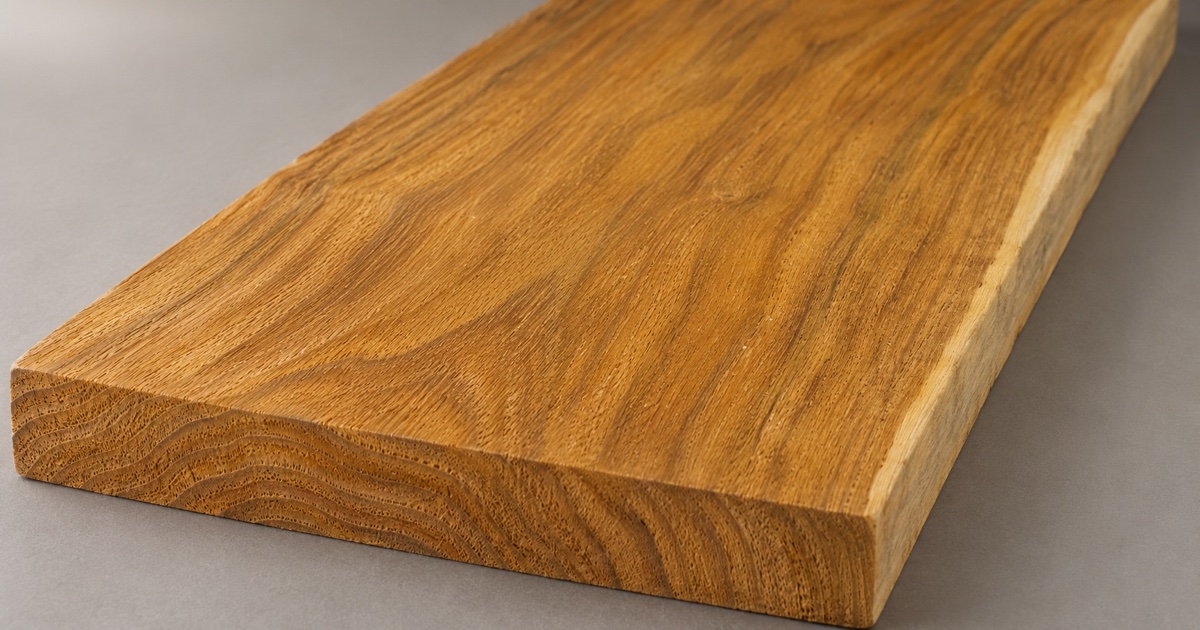
Teak is a golden-brown, naturally oily hardwood that resists rot and moisture, which makes it a classic choice for boat decks and fittings, outdoor furniture and joinery. Its high silica content dulls cutting edges quickly.
Health hazards
-
Skin allergy
Evidence: Confirmed in clinical testing
Teak dust is a well documented cause of allergic skin rashes. In one furniture factory study about half of heavily exposed workers had eczema or severe itching, and patch tests confirmed allergy to teak dust; lapachol and deoxylapachol in the wood are identified sensitizers.1234
- Effects
- allergic contact dermatitis, itching
- Exposure route
- skin
- From
- dust
-
Skin irritation
Evidence: Listed by an agency
Hives (nettle rash) from teak are listed by the UK safety regulator and described in a case report, and the factory study above found that moistened teak dust could also irritate skin directly.451
- Effects
- contact urticaria (hives), skin irritation
- Exposure route
- skin
- From
- dust
-
Respiratory irritation
Evidence: Listed by an agency
The UK safety regulator lists breathing problems among the reported effects of teak dust.4
- Effects
- respiratory symptoms
- Exposure route
- inhalation
- From
- dust
-
Asthma / respiratory allergy
Evidence: Reported
Occupational asthma from teak is listed in a peer-reviewed review of wood dust allergy, based on a German workplace study we have not yet been able to check directly.6
- Effects
- asthma
- Exposure route
- inhalation
- From
- dust
-
Cancer
Evidence: Listed by an agency
ACGIH names teak dust as a suspected human carcinogen (class A2).7
- Effects
- nasal and sinus cancer
- Exposure route
- inhalation
- From
- dust
-
Cancer
Evidence: Applies to all wood dust
IARC classifies all wood dust as carcinogenic to humans, mainly linked to cancers of the nasal cavity and sinuses after long-term exposure.8
- Effects
- nasal and sinus cancer
- Exposure route
- inhalation
- From
- dust
Not finding a hazard listed here does not mean this wood is safe. All wood dust is hazardous; see how to protect yourself.
Exposure limits
| Body | Limit | Notes |
|---|---|---|
| ACGIH TLV | 1 mg/m³ (inhalable) | source |
| EU binding limit (hardwood) | 2 mg/m³ | Applies to all hardwood dust |
| UK WEL (hardwood) | 3 mg/m³ | Applies to all hardwood dust |
| NIOSH REL | 1 mg/m³ | Recommended limit for all wood dust |
Cancer classifications
- ACGIH: A2 source
Known compounds
Sources
- Krogh HK. Contact eczema caused by true teak (Tectona grandis). An epidemiological investigation in a furniture factory. Br J Ind Med. 1962;19(1):42-46. Link
- Krogh HK. Contact eczema caused by true teak (Tectona grandis). A follow-up study of a previous epidemiological investigation, and a study into the sensitizing effect of various teak extracts. Br J Ind Med. 1964;21(1):65-68. Link
- Estlander T, Jolanki R, Alanko K, Kanerva L. Occupational allergic contact dermatitis caused by wood dusts. Contact Dermatitis. 2001;44(4):213-7. Link
- Health and Safety Executive. Toxic woods. Woodworking Information Sheet No 30 (Revision 1), WIS30(rev1). HSE; first published 11/2012. Withdrawn from hse.gov.uk (404 since c. Jan 2020); archived copy cited. Link
- Schmidt H. Contact urticaria to teak with systemic effects. Contact Dermatitis. 1978;4(3):176-177. Link
- Schlünssen V, Sigsgaard T, Raulf-Heimsoth M, Kespohl S. Workplace exposure to wood dust and the prevalence of wood-specific sensitization. Allergol Select. 2018;2(1):101-110. Link
- US Occupational Safety and Health Administration. Occupational Chemical Database: Wood Dust. Last updated 06/23/2023. Link
- IARC Working Group on the Evaluation of Carcinogenic Risks to Humans. Wood Dust and Formaldehyde. IARC Monographs on the Evaluation of Carcinogenic Risks to Humans, Vol. 62. Lyon: International Agency for Research on Cancer; 1995. Link
- Schmalle HW, Hausen BM. The structure of deoxylapachol, the contact allergen of Tectona grandis L. Naturwissenschaften. 1984;71(11):581-582. Link
Last reviewed .