Walnut
Juglans spp. · Juglandaceae · hardwood
Also known as: black walnut, American walnut, English walnut, European walnut, Persian walnut, Claro walnut, Central American walnut, Juglans
Region: North and Central America, Europe and Asia; main lumber species are black walnut (eastern North America) and English walnut (Europe/Asia)
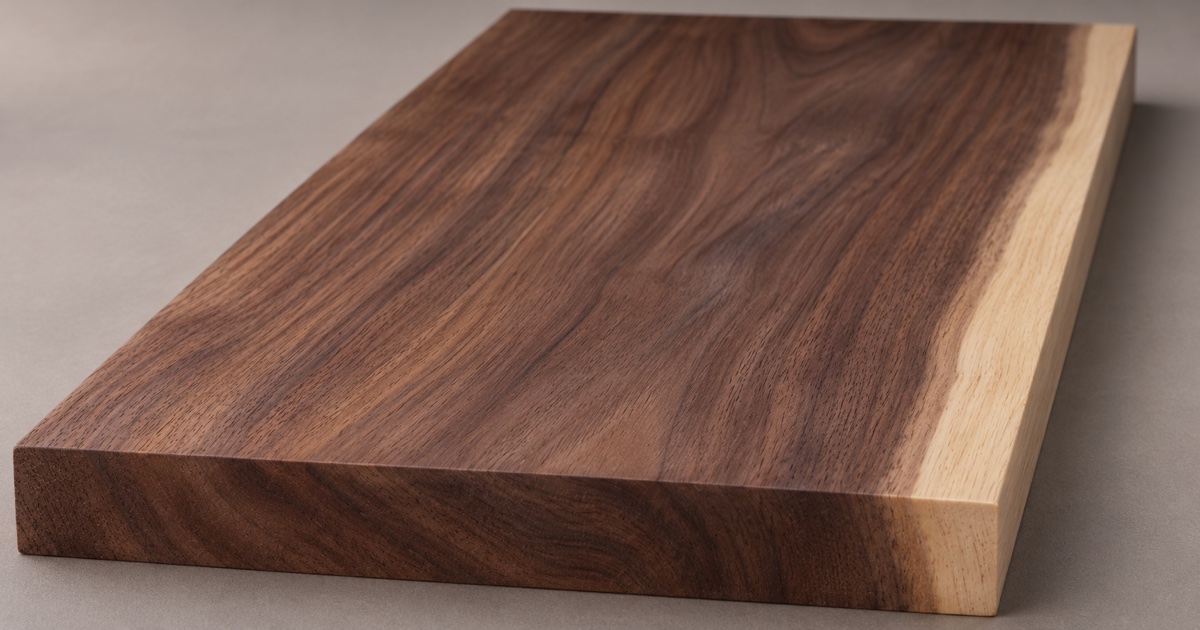
Walnut is a dark, prized furniture hardwood, mainly black walnut (Juglans nigra) in North America and English or European walnut (Juglans regia). Woodworkers use it for fine furniture, gunstocks, veneer, turning, and accents, and it is often finished without stain for its chocolate-brown color.
Health hazards
-
Cancer
Evidence: Applies to all wood dust
IARC classifies all wood dust as carcinogenic to humans, mainly linked to cancer of the nasal cavity and sinuses after long-term heavy exposure. This applies to every species, so dust control matters whatever you cut.1
- Effects
- nasal and sinus cancer
- Exposure route
- inhalation
- From
- dust
-
Cancer
Evidence: Listed by an agency
ACGIH names walnut dust as a suspected human carcinogen (A2). The listing says walnut without naming a species.2
- Effects
- nasal and sinus cancer
- Exposure route
- inhalation
- From
- dust
-
Asthma / respiratory allergy
Evidence: Confirmed in clinical testing
One worker developed asthma from Central American walnut (Juglans olanchana) dust, confirmed by inhalation challenge; no IgE antibodies were found, so the mechanism is unclear. This is not black or English walnut, and we found no confirmed asthma reports for those species.3
- Effects
- occupational asthma
- Exposure route
- inhalation
- From
- dust
-
Respiratory irritation
Evidence: Listed by an agency
The UK HSE lists sneezing and runny or blocked nose (rhinitis) for walnut, excluding African walnut. It does not name the Juglans species.4
- Effects
- sneezing, rhinitis
- Exposure route
- inhalation
- From
- dust
-
Skin allergy
Evidence: Confirmed in clinical testing
A Finnish clinic series found two workers whose dermatitis reacted to walnut dust on patch testing. The abstract does not say which walnut species.5
- Effects
- allergic contact dermatitis
- Exposure route
- skin
- From
- dust
-
Skin irritation
Evidence: Listed by an agency
Juglone in green walnut husks can stain skin brown and cause blistering irritation, and the UK HSE notes dermatitis from walnut nut shells and roots. This comes from the nuts, husks, and roots rather than dry lumber.46
- Effects
- irritant dermatitis, blistering, brown skin staining
- Exposure route
- skin
Not finding a hazard listed here does not mean this wood is safe. All wood dust is hazardous; see how to protect yourself.
Exposure limits
| Body | Limit | Notes |
|---|---|---|
| ACGIH TLV | 1 mg/m³ (inhalable) | 8-hour time-weighted average, as restated by OSHA source |
| EU binding limit (hardwood) | 2 mg/m³ | Applies to all hardwood dust |
| UK WEL (hardwood) | 3 mg/m³ | Applies to all hardwood dust |
| NIOSH REL | 1 mg/m³ | Recommended limit for all wood dust |
Cancer classifications
- ACGIH: A2 source
Known compounds
- juglone: skin irritant and stain in green walnut husks source
Sources
- IARC Working Group on the Evaluation of Carcinogenic Risks to Humans. Wood Dust and Formaldehyde. IARC Monographs on the Evaluation of Carcinogenic Risks to Humans, Vol. 62. Lyon: International Agency for Research on Cancer; 1995. Link
- US Occupational Safety and Health Administration. Occupational Chemical Database: Wood Dust. Last updated 06/23/2023. Link
- Bush RK, Clayton D. Asthma due to Central American walnut (Juglans olanchana) dust. Clin Allergy. 1983;13(4):389-94. Link
- Health and Safety Executive. Toxic woods. Woodworking Information Sheet No 30 (Revision 1), WIS30(rev1). HSE; first published 11/2012. Withdrawn from hse.gov.uk (404 since c. Jan 2020); archived copy cited. Link
- Estlander T, Jolanki R, Alanko K, Kanerva L. Occupational allergic contact dermatitis caused by wood dusts. Contact Dermatitis. 2001;44(4):213-7. Link
- Olvera-Cortés V, Pulido-Díaz N, Orellana-Arauco ÁR. Discoloration and bullous lesions on the hands. Cutis. 2019;104(4):E6-E8. Link
Last reviewed .