Yew
Taxus baccata · Taxaceae · softwood
Also known as: English yew, European yew, common yew
Region: Europe, North Africa and western Asia; widely planted in gardens and churchyards
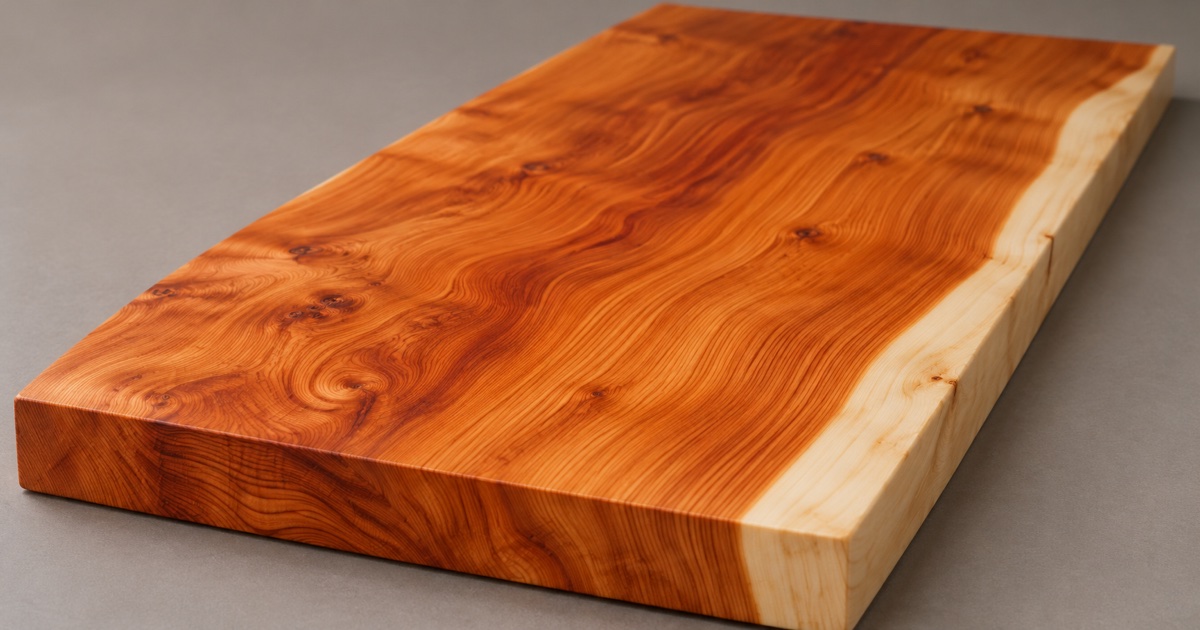
Yew is a dense, fine-grained softwood with orange-brown heartwood and creamy sapwood. Woodworkers use it for turning, carving, cabinet work and traditional longbows.
Health hazards
-
Heart effects
Evidence: Reported
Swallowing yew needles (leaves), and less often other parts of the plant, can cause life-threatening heart rhythm problems and has caused deaths; the toxic taxine alkaloids have been measured in patients' blood. This evidence is about eating the plant, not about woodworking dust.1234
- Effects
- slow or irregular heartbeat, heart block, ventricular arrhythmia, cardiogenic shock, death
- Exposure route
- ingestion
- From
- leaves
-
Whole-body (systemic) effects
Evidence: Listed by an agency
The UK HSE lists headache, a fall in blood pressure and heart effects among reported effects of working yew. We found no primary case report of heart problems from yew wood dust, so how much toxin the dust delivers is unknown.5
- Effects
- headache, drop in blood pressure, cardiac effects
- Exposure route
- inhalation, skin
- From
- dust
-
Skin irritation
Evidence: Listed by an agency
The UK HSE lists dermatitis from yew. It does not say whether this is irritation or allergy, and no primary report was found.5
- Effects
- dermatitis
- Exposure route
- skin
- From
- dust
-
Cancer
Evidence: Applies to all wood dust
All wood dust is classified as carcinogenic to humans, mainly linked to cancers of the nose and sinuses. This applies to this wood like every other species.6
- Effects
- nasal and sinus cancer
- Exposure route
- inhalation
- From
- dust
Not finding a hazard listed here does not mean this wood is safe. All wood dust is hazardous; see how to protect yourself.
Exposure limits
| Body | Limit | Notes |
|---|---|---|
| ACGIH TLV | 1 mg/m³ (inhalable) | source |
| UK WEL (softwood) | 5 mg/m³ | Applies to all softwood dust |
| NIOSH REL | 1 mg/m³ | Recommended limit for all wood dust |
Cancer classifications
- ACGIH: A4 source
Known compounds
Sources
- Grobosch T, Schwarze B, Felgenhauer N, Riesselmann B, Roscher S, Binscheck T. Eight cases of fatal and non-fatal poisoning with Taxus baccata. Forensic Sci Int. 2013;227(1-3):118-126. Link
- Reijnen G, Bethlehem C, van Remmen JMBL, Smit HJM, van Luin M, Reijnders UJL. Post-mortem findings in 22 fatal Taxus baccata intoxications and a possible solution to its detection. J Forensic Leg Med. 2017;52:56-61. Link
- Alloatti G, Penna C, Levi RC, Gallo MP, Appendino G, Fenoglio I. Effects of yew alkaloids and related compounds on guinea-pig isolated perfused heart and papillary muscle. Life Sci. 1996;58(10):845-854. Link
- Tekol Y, Kameyama M. Elektrophysiologische Untersuchungen ueber den Wirkungsmechanismus des Eibentoxins Taxin am Herzen [Electrophysiology of the mechanisms of action of the yew toxin, taxine, on the heart]. Arzneimittelforschung. 1987;37(4):428-431. Link
- Health and Safety Executive. Toxic woods. Woodworking Information Sheet No 30 (Revision 1), WIS30(rev1). HSE; first published 11/2012. Withdrawn from hse.gov.uk (404 since c. Jan 2020); archived copy cited. Link
- IARC Working Group on the Evaluation of Carcinogenic Risks to Humans. Wood Dust and Formaldehyde. IARC Monographs on the Evaluation of Carcinogenic Risks to Humans, Vol. 62. Lyon: International Agency for Research on Cancer; 1995. Link
- US Occupational Safety and Health Administration. Occupational Chemical Database: Wood Dust. Last updated 06/23/2023. Link
Last reviewed .